
Ethanol In India 7 Powerful Picks Ethanol In India is an important topic for investors who want to understand the future of biofuels, renewable energy, agriculture, and alternative fuel production. Ethanol is an alcohol-based fuel made from plant materials such as sugarcane, corn, and other sources of biomass. It can be blended with petrol and used in suitable engines, depending on fuel standards and local regulations. As countries look for ways to diversify energy supplies, ethanol has become an important part of discussions about cleaner transport and energy security.
However, a growing industry does not automatically make every related company a good investment. Some businesses may benefit from rising demand, while others may struggle with high costs, weak profits, debt, or changes in government policy. Therefore, investors need to understand the complete business before choosing a stock.
This guide explains seven powerful ways to research ethanol-related investment opportunities. It covers producers, sugar businesses, agricultural suppliers, biofuel technology companies, and other businesses connected to the ethanol value chain. The goal is to help beginners understand what to look for rather than simply follow market excitement.
Table of Contents
Quick Summary
| Topic | What investors should understand |
|---|---|
| Ethanol producers | Production capacity, costs, sales and profit margins |
| Sugar companies | Sugar earnings and ethanol business exposure |
| Grain-based producers | Feedstock prices and production efficiency |
| Biofuel technology | Innovation, efficiency and commercial demand |
| Agricultural suppliers | Availability and cost of raw materials |
| Storage and distribution | Infrastructure, logistics and safety requirements |
| Diversified energy companies | Balance between traditional energy and biofuels |
The main lesson is simple: study the business model, financial strength, valuation, and risks before investing. Ethanol may offer opportunities, but future growth and investment returns are never guaranteed.
Ethanol In India 7 Powerful Picks-What Is Ethanol and Why Does It Matter?
Ethanol is a type of alcohol that can be produced through fermentation. In a common process, microorganisms convert sugars into alcohol. Manufacturers then process the mixture to obtain ethanol suitable for its intended use.
The raw materials vary across the world. Sugar-rich crops, starch-based crops, and agricultural residues can all play a role, depending on available technology and local economics. Some advanced processes aim to produce fuel from non-food biomass, including crop waste and other plant materials.
Ethanol is used in several industries. Fuel blending is one important application, but ethanol also has uses in chemicals, pharmaceuticals, personal-care products, and industrial manufacturing. The quality and purity required depend on the final use.
Why Ethanol Attracts Investor Attention
There are several reasons investors research this industry. First, many countries want to diversify their energy supplies and reduce dependence on a single fuel source. Second, governments may introduce blending targets or other policies that support alternative fuels. Third, improvements in production technology may help manufacturers use raw materials more efficiently.
However, these drivers do not guarantee higher share prices. Investors must separate growth in the overall industry from growth in an individual company’s profits.
For example, a producer may sell more ethanol but earn less money if its feedstock costs rise faster than selling prices. Another company may have strong production capacity but carry too much debt to expand safely. This is why financial analysis matters as much as industry growth.
Ethanol Is Not Automatically Carbon-Neutral
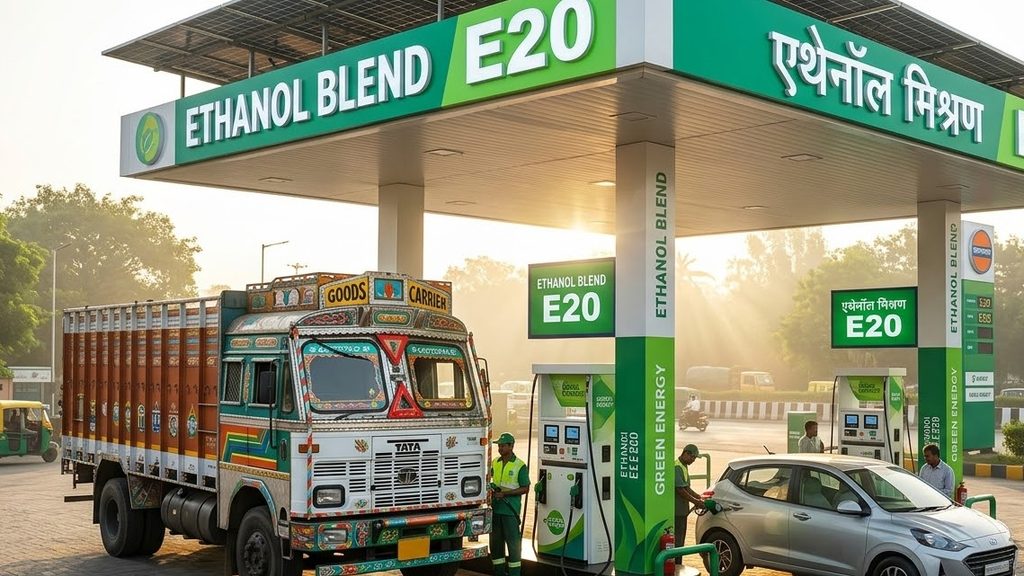
Ethanol is often discussed as a lower-carbon fuel alternative, but its environmental impact depends on how it is produced and transported. Farming, fertiliser use, processing energy, land-use changes, and distribution can all affect its total emissions.
Therefore, investors should be careful with claims that every ethanol product is automatically clean or sustainable. Credible companies should provide clear information about production methods, resource use, emissions, and environmental compliance.
Ethanol In India: 7 Powerful Investment Picks to Research
The following seven picks are investment categories and research opportunities, not a guaranteed list of winning stocks. They can help investors identify companies worth studying across the ethanol value chain. The principles are useful for global readers, although the availability of particular companies, policies, and investment products differs by market.
1. Ethanol Manufacturing Companies
Ethanol manufacturers are the most direct businesses to research when studying the industry. Their main activity is producing ethanol and selling it to fuel suppliers, chemical businesses, or other customers.
A producer’s performance depends on several factors. These include plant capacity, operating efficiency, access to raw materials, energy costs, customer contracts, and the selling price of ethanol. Companies with efficient plants and reliable customers may be better positioned than producers that regularly face supply interruptions or high operating costs.
However, production capacity alone does not tell the whole story. A company may announce a large plant but take years to reach full production. Construction expenses, financing costs, maintenance, and delays can reduce the expected benefits of expansion.
What to Check Before Investing
Start by reviewing the company’s annual report and recent financial statements. Check revenue growth, operating profit margins, debt, cash flow, and capital expenditure. Compare these figures over several years rather than relying on one strong quarter.
Also examine how much of the company’s revenue comes from ethanol. A business that earns most of its income from unrelated activities may not offer the same exposure as a dedicated producer.
Practical example: Imagine two manufacturers. Company A has a smaller plant but consistently earns profits and generates cash. Company B has a much larger plant but carries heavy debt and struggles with operating costs. The larger company is not automatically the better investment.
The key is to understand whether the business can turn production into sustainable profits. This is the first important research step when exploring Ethanol In India and the wider biofuel market.
2. Sugar Companies With Ethanol Operations

Some sugar businesses produce ethanol from molasses, a by-product of sugar processing. Depending on the factory setup, feedstock availability, and regulations, they may also use other sugar-based materials.
This business model can create more than one source of revenue. When sugar operations and ethanol production work well together, the company may have additional ways to use its raw materials and processing facilities.
Nevertheless, sugar companies face risks that a simple ethanol growth story may hide. Sugar prices can change, harvests depend on weather, and water availability can affect production. Government rules may also influence sugar sales, export activity, and the allocation of raw materials.
Why the Financial Details Matter
Investors should check how much profit comes from sugar, how much comes from ethanol, and whether either activity depends on temporary favourable conditions. They should also look at working capital, debt repayments, and the company’s ability to manage weak agricultural seasons.
A useful question is whether ethanol makes the company more resilient or simply adds another business that requires substantial investment.
For example, a sugar producer might benefit when ethanol sales are strong, but its overall earnings could still fall if sugar prices weaken or crop yields decline. Diversification helps only when the combined businesses are managed effectively.
When researching Ethanol In India, do not classify every sugar company as a strong ethanol investment. Confirm the scale of its actual ethanol operations, the timing of new capacity, and its financial results.
3. Grain-Based Ethanol Producers

Grain-based ethanol producers use crops such as corn or other starch-rich grains. These businesses can be important in regions where grain supplies, agricultural infrastructure, and suitable processing technology are readily available.
Their financial performance depends heavily on the relationship between feedstock costs and ethanol selling prices. If grain becomes expensive while ethanol prices remain stable, profit margins may shrink. On the other hand, efficient plants with dependable supplies and strong customer relationships may manage these pressures more effectively.
The Importance of Feedstock Management
Investors should investigate where the company purchases its grain, whether supplies are dependable, and how it handles price changes. Storage capacity, transportation expenses, seasonal supply patterns, and production efficiency can all affect the final cost of each unit of ethanol.
It is also important to consider the use of agricultural land and food crops. In some markets, competition between fuel production and food demand can influence public debate, regulation, and raw material prices.
A company that can use different feedstocks may have greater flexibility, but this advantage must be confirmed through its actual facilities and operating results.
Before selecting a grain-based producer, compare its profit margins with those of similar companies. Look for consistent cash generation instead of relying only on sales growth or management forecasts.
For investors studying Ethanol In India, grain-based production also offers a useful way to understand how different production methods compete. The best business is not necessarily the one that produces the most ethanol; it may be the one that controls costs and uses its assets most efficiently.
4. Advanced Biofuel and Ethanol Technology Companies

Advanced biofuel companies try to improve how ethanol is produced. Some research and commercial processes use agricultural residues, wood waste, or other non-food biomass. These methods can create value from materials that might otherwise have limited uses.
The attraction is easy to understand. If a company can turn low-value waste into a useful fuel at a competitive cost, it may develop a valuable business. However, the technology must work reliably at commercial scale before investors can treat its potential as a proven financial advantage.
Research, Patents, and Commercial Production
When examining a technology company, check whether it has a working commercial plant, a pilot project, or only a laboratory process. These stages are very different. A promising laboratory result does not prove that a company can produce ethanol profitably in large quantities.
Review research spending, licensing income, partnerships, customer agreements, and cash reserves. Find out whether the company earns revenue from its technology or depends on regular fundraising to continue development.
Patents may protect certain inventions, but they do not guarantee market demand or profitable production. Likewise, a partnership announcement does not necessarily mean a project is complete or generating income.
Investors should look for evidence such as actual production volumes, operating costs, customer payments, and repeat orders. These details can help distinguish commercial progress from promotional claims.
Advanced biofuels may be an interesting long-term research area, but they can also involve high uncertainty. Companies in this category may suit investors who understand technology risk and can tolerate the possibility of substantial losses.
5. Agricultural Feedstock Suppliers

Ethanol production starts with raw materials. Farmers, agricultural processors, biomass collectors, and suppliers can therefore play an important role in the industry.
These businesses may supply crops, molasses, agricultural residues, or other materials used by ethanol manufacturers. Some also provide storage, collection, processing, or transportation services.
However, not every agricultural supplier benefits directly when ethanol demand rises. The impact depends on its contracts, costs, bargaining power, and the availability of competing buyers.
What Makes a Feedstock Supplier Worth Studying?
Look at the company’s customer base and supply agreements. Does it sell to several buyers or depend on one major customer? Can it obtain raw materials at predictable prices? Does it have enough storage and transport capacity to handle seasonal changes?
Another important factor is quality control. Manufacturers need suitable feedstock that meets their production requirements. Reliable quality and timely delivery may help a supplier maintain long-term customer relationships.
Consider a hypothetical supplier that collects agricultural residue from several farming areas. If it can organise collection efficiently, reduce waste, and deliver consistent material, it may develop a useful position in the supply chain. But if transportation costs are too high, the business could remain unprofitable even when demand increases.
Investors should also review working capital. Agricultural suppliers may need to pay farmers or transport providers before receiving payment from industrial customers. This can create cash-flow pressure during periods of rapid growth.
For an investor researching Ethanol In India, agricultural suppliers offer a different perspective from manufacturers. They may provide exposure to the industry’s supply chain, but their profits still depend on execution, pricing, and financial discipline.
6. Ethanol Storage, Logistics, and Distribution Businesses
Ethanol must be handled, stored, and transported under appropriate safety and quality requirements. This creates a role for specialised logistics providers, storage operators, terminal businesses, and distributors.
The opportunity is not simply about building more tanks or transporting more fuel. The business must deliver reliable service while managing safety, maintenance, compliance, insurance, and operating costs.
How to Evaluate Infrastructure Companies
First, determine whether the company actually serves ethanol producers or has only a general connection to the energy sector. Read its customer disclosures and segment reports to identify the revenue generated by relevant services.
Next, examine asset utilisation. Storage facilities and specialised equipment can be expensive. If a facility remains underused, it may struggle to cover its fixed costs. Long-term contracts and repeat customers can make revenue more predictable, although contract terms and customer credit quality still matter.
Investors should also check debt levels and planned capital expenditure. An infrastructure company can report rising revenue while spending so heavily on new facilities that little cash remains for shareholders.
Safety is another key consideration. Poor handling, unsuitable storage, or weak compliance systems can lead to serious financial and operational consequences.
This category may be useful for investors who prefer businesses that support the fuel supply chain rather than manufacture ethanol themselves. Still, the connection between ethanol demand and company profits must be demonstrated with evidence.
7. Diversified Energy and Industrial Companies

The final pick is a diversified business that operates across several energy or industrial activities. Some companies may have exposure to conventional fuels, renewable energy, chemicals, biofuels, or related infrastructure.
The advantage is that investors are not relying entirely on one product. If ethanol earnings weaken, another business segment may provide support. However, diversification can also make a company harder to analyse because its overall performance may depend more on its largest business than on ethanol.
Measure the Real Ethanol Exposure
Begin by identifying the share of revenue and operating profit linked to ethanol or related biofuel activities. If a company earns only a small portion of its income from ethanol, a rise in ethanol demand may have little effect on its total earnings.
Also review how the company allocates capital. Management might invest heavily in a new biofuel project while reducing spending elsewhere. Investors should understand the expected returns, project risks, financing plans, and time needed to generate cash.
Compare the company’s overall valuation with its financial performance. A strong brand or a large energy business does not automatically mean its shares are attractively priced.
For example, a diversified company might have a promising ethanol division but an expensive valuation because investors already expect rapid growth. Even if the division performs well, the share price may not rise if actual results fail to exceed those expectations.
This is an important lesson when evaluating Ethanol In India: a promising industry and an attractive stock are two different things.
How to Compare Ethanol Investment Opportunities
After identifying potential companies, create a simple comparison sheet. This helps you evaluate them using the same standards instead of relying on headlines or social media discussions.
| Factor | What to examine | Why it matters |
|---|---|---|
| Revenue growth | Multi-year sales trend | Shows whether the business is expanding |
| Operating margin | Profit relative to revenue | Helps measure cost control |
| Debt | Borrowings and repayment needs | Reveals financial pressure |
| Cash flow | Cash generated by operations | Shows whether profits translate into cash |
| Capacity utilisation | Actual output compared with potential output | Measures use of production assets |
| Customer concentration | Dependence on major buyers | Identifies revenue risk |
| Valuation | Price compared with relevant financial measures | Helps assess market expectations |
| Management quality | Disclosures and capital allocation | Supports confidence in business decisions |
No single metric is enough. A company may have low debt but poor growth, while another may grow quickly but require substantial additional funding. Compare businesses with similar operating models whenever possible.
Understand Profit Margins Before Sales Growth
Revenue growth attracts attention, but investors ultimately need to understand profitability. A producer could sell more ethanol and still earn less if the price of raw materials rises sharply.
For example, suppose a manufacturer receives 100 units of revenue and spends 80 units on operating costs. Its operating profit is 20 units. If revenue later rises to 120 units but costs rise to 105 units, operating profit falls to 15 units despite higher sales.
This simplified example shows why investors should monitor costs, selling prices, and operating margins together.
Check Cash Flow and Borrowing
Building an ethanol plant can require significant capital. Companies may borrow money to fund construction, purchase machinery, or expand production. Debt can support growth, but repayments and interest expenses can become a burden if earnings fall.
Read the cash flow statement alongside the income statement. Check whether operating activities generate cash and whether the business can fund maintenance and expansion without taking on excessive debt.
Consider the Price You Pay
Even a well-managed company can be a poor investment if its shares are too expensive. A high valuation may already reflect years of expected growth.
Compare valuation measures with similar businesses and examine how much profit growth the current share price appears to require. Avoid assuming that a popular theme will always outperform the broader market.
Major Risks of Investing in Ethanol
Ethanol can be part of a growing energy market, but investors should understand its risks before committing money.
Policy and Regulatory Changes
Government policies can affect fuel blending, production standards, feedstock availability, taxes, and permitted uses. A change in policy can improve business conditions for some producers while creating difficulties for others.
Do not assume that a current incentive or blending target will remain unchanged indefinitely. Review official announcements and understand whether a company’s business model depends heavily on government support.
Raw Material Price Changes
Sugarcane, corn, and other feedstocks can experience price swings due to weather, harvest size, transportation costs, and competing demand. If a producer cannot pass higher costs to customers, its margins may decline.
Technology and Competition
New production methods may improve efficiency, but they can also require large investments. Companies that fail to modernise may lose competitiveness. At the same time, other energy technologies can compete for investment and policy support.
Environmental and Water Concerns
Some production methods require significant water, energy, or agricultural inputs. Environmental rules and community concerns may affect expansion plans. Investors should examine how a company manages water use, waste, emissions, and local environmental requirements.
Market Valuation and Investor Sentiment
A share price can fall even when the business continues to grow. This may happen if market expectations were too high, financial results disappoint, or investors move away from the sector.
For this reason, avoid investing based only on a rising chart, a social media tip, or a promise of guaranteed returns. Every investment involves risk, and losses are possible.
A Practical Step-by-Step Plan for Beginners
Investors who are new to the biofuel industry can follow a simple research process. There is no need to understand every technical detail before beginning, but you should know how to check the basics.
Step 1: Understand the business. Find out whether the company manufactures ethanol, supplies raw materials, provides logistics, or develops technology. This helps you understand what drives its revenue.
Step 2: Read the latest annual report. Review the company’s main business activities, financial statements, risks, debt, and future plans. Check whether management explains its results clearly.
Step 3: Compare several years of performance. Look at revenue, operating profits, cash flow, and borrowing over time. A single good year may not represent a sustainable trend.
Step 4: Examine the valuation. Compare the share price with relevant financial measures and similar businesses. Do not assume that an attractive industry automatically means an attractive price.
Step 5: Consider your own risk tolerance. A company with high debt or an unproven technology may be unsuitable for someone who needs stability or may need the money soon.
Step 6: Review the latest developments. Check official company disclosures, regulatory announcements, and credible industry reports. Avoid making decisions based only on old news.
Step 7: Write down your investment reasons. Before buying, explain in simple words why the business might succeed, what could go wrong, and what evidence would change your view. This can help you avoid decisions driven by excitement or fear.
Experience, Expertise, Authoritativeness, and Trustworthiness
Financial content should help readers make informed decisions rather than encourage them to buy a stock without research. That is especially important when an investment involves changing policies, commodity prices, and developing technology.
For this article, the seven picks are based on a business-model framework: identify where revenue comes from, understand the costs, examine the financial statements, and assess the risks. This is a research method, not a claim that these categories will outperform the market.
If you have personally researched an ethanol company, visited a production facility, or spoken with an industry expert, you can add a genuine example here. Include what you observed, when it happened, and what evidence supports your conclusion. Do not claim personal visits, investment returns, or expert interviews that did not happen.
For reliable background, readers can consult the International Energy Agency for energy-market analysis and Google Search Central’s helpful content guidance for information about publishing useful, trustworthy article
Frequently Asked Questions
1. What is ethanol, and how is it used as fuel?
Ethanol is an alcohol that can be produced from crops or other biomass. Fuel-grade ethanol can be blended with petrol where permitted and used in compatible vehicles. Its suitability depends on fuel standards, blend levels, and engine requirements.
2. Is ethanol a good long-term investment opportunity?
Ethanol may offer opportunities as demand for alternative fuels develops. However, investment results depend on company profits, production costs, competition, government policy, and share valuation. Investors should research individual businesses rather than assume that the entire sector will perform well.
3. Which types of companies benefit from ethanol demand?
Potentially relevant businesses include ethanol manufacturers, sugar processors, grain-based producers, advanced biofuel technology firms, agricultural suppliers, logistics providers, and diversified energy companies. The benefits differ by business model and must be verified through company disclosures.
4. What are the biggest risks of ethanol stocks?
Important risks include changing regulations, volatile raw material prices, high capital costs, debt, environmental concerns, competition, and expensive valuations. A company can operate in a growing industry and still deliver poor investment returns.
5. How can beginners research ethanol companies?
Start with the annual report, financial statements, debt levels, cash flow, operating margins, production capacity, and customer contracts. Compare several years of performance and read official announcements before making an investment decision.
Conclusion: Make Research Your First Pick
Ethanol In India offers a useful starting point for understanding the wider biofuel industry and its potential investment opportunities. However, the most important decision is not simply choosing a company connected to ethanol. It is understanding how that company earns money, manages costs, funds expansion, and responds to industry changes.
The seven categories covered in this guide provide a practical way to explore the industry. Ethanol manufacturers offer direct exposure to production. Sugar and grain businesses connect fuel production with agriculture. Technology firms focus on new processes, while suppliers and logistics companies support the wider value chain. Diversified energy businesses may offer exposure alongside other activities.
Before investing, check the financial statements, assess the valuation, and understand the risks. Compare companies using consistent measures instead of following market excitement.
Most importantly, do not invest money simply because a company appears in a list of powerful picks. Use the list to build your research shortlist, verify the latest information, and make decisions that match your financial goals and risk tolerance.
REFRANCE- Ethanol In India 7 Powerful Picks Ethanol In India 7 Powerful Picks Ethanol In India 7 Powerful Picks Ethanol In India 7 Powerful Picks Ethanol In India 7 Powerful Picks Ethanol In India 7 Powerful Picks Ethanol In India 7 Powerful Picks Ethanol In India 7 Powerful Picks Ethanol In India 7 Powerful Picks Ethanol In India 7 Powerful Picks Ethanol In India 7 Powerful Picks Ethanol In India 7 Powerful Picks Ethanol In India 7 Powerful Picks Ethanol In India 7 Powerful Picks Ethanol In India 7 Powerful Picks Ethanol In India 7 Powerful Picks
Ethanol In India 7 Powerful Picks Ethanol In India 7 Powerful Picks Ethanol In India 7 Powerful Picks Ethanol In India 7 Powerful Picks Ethanol In India 7 Powerful Picks Ethanol In India 7 Powerful Picks Ethanol In India 7 Powerful Picks Ethanol In India 7 Powerful Picks Ethanol In India 7 Powerful Picks Ethanol In India 7 Powerful Picks Ethanol In India 7 Powerful Picks Ethanol In India 7 Powerful Picks Ethanol In India 7 Powerful Picks Ethanol In India 7 Powerful Picks Ethanol In India 7 Powerful Picks Ethanol In India 7 Powerful Picks
Ethanol In India 7 Powerful Picks Ethanol In India 7 Powerful Picks Ethanol In India 7 Powerful Picks Ethanol In India 7 Powerful Picks Ethanol In India 7 Powerful Picks Ethanol In India 7 Powerful Picks Ethanol In India 7 Powerful Picks Ethanol In India 7 Powerful Picks Ethanol In India 7 Powerful Picks Ethanol In India 7 Powerful Picks Ethanol In India 7 Powerful Picks Ethanol In India 7 Powerful Picks Ethanol In India 7 Powerful Picks Ethanol In India 7 Powerful Picks Ethanol In India 7 Powerful Picks Ethanol In India 7 Powerful Picks
1 thought on “Ethanol In India 7 Powerful Picks”