
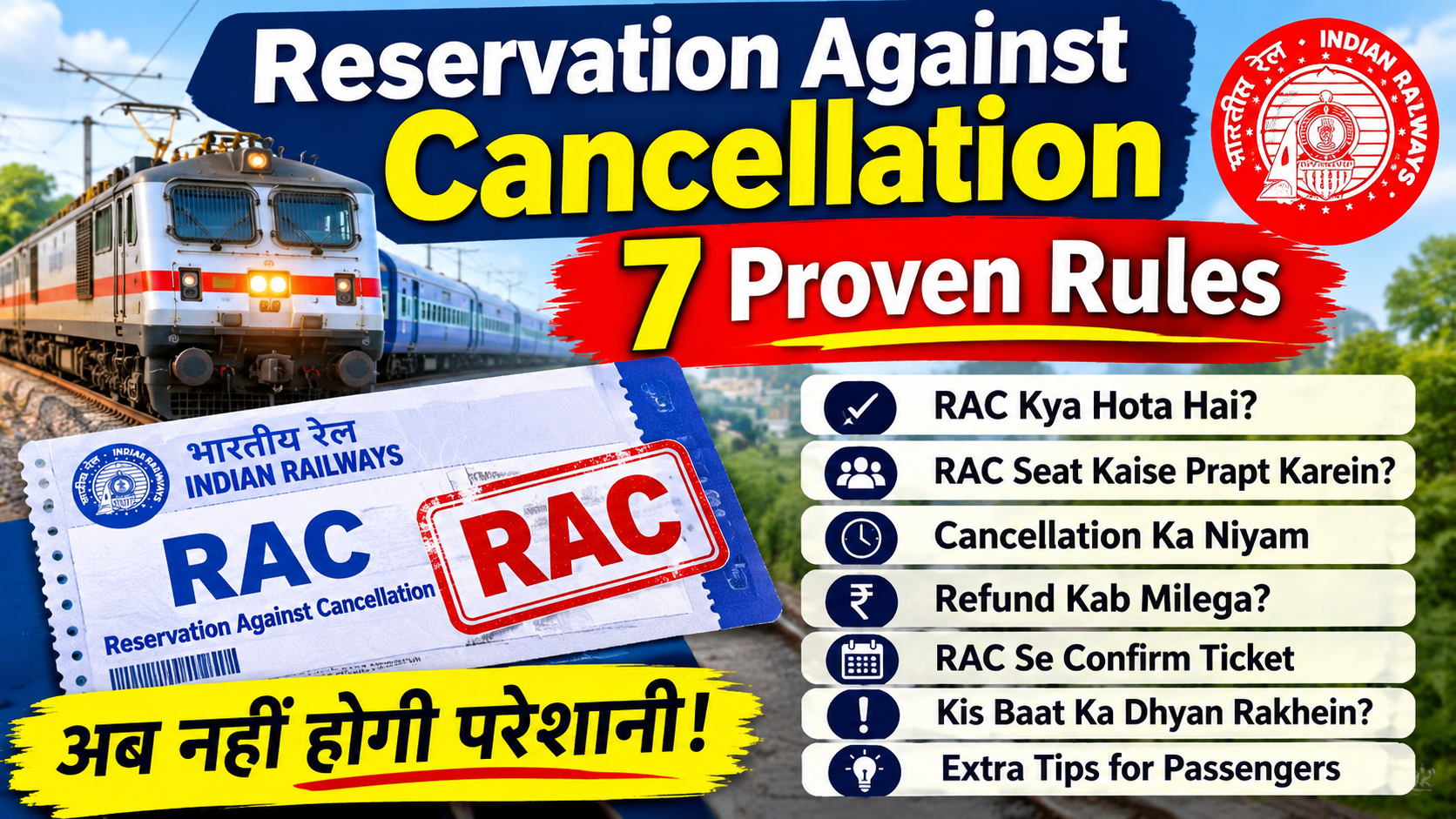
Reservation Against Cancellation 7 Proven Rules is an important railway reservation system that helps passengers travel even when confirmed berths are not immediately available. Many passengers see RAC written on their train tickets but do not fully understand what it means, how it works, or whether they will receive a complete sleeping berth before the journey.
The situation can create confusion, especially when someone has booked a ticket for an important journey. A passenger may wonder whether the ticket is confirmed, whether travelling is permitted, or whether the railway will provide a separate berth later.
Understanding Reservation Against Cancellation can make railway travel easier to plan. It also helps passengers understand the difference between RAC, confirmed tickets and waiting-list tickets.
In this guide, we will explain seven important Reservation Against Cancellation rules in simple language. You will learn about seat allotment, berth availability, ticket status, chart preparation, cancellation, refunds and common mistakes. The aim is to help passengers make better decisions before starting their journey.
Table of Contents
Quick Summary: Reservation Against Cancellation
| Topic | Important Information |
|---|---|
| RAC meaning | Reservation Against Cancellation |
| Basic benefit | Reserved sitting accommodation |
| Full berth | May become available if accommodation is vacant |
| Confirmation | Depends on available accommodation |
| PNR status | Shows the latest booking status |
| Cancellation | Subject to railway refund rules |
| Main advice | Check the final reservation chart before travelling |
Reservation Against Cancellation 7 Proven Rules-What Is Reservation Against Cancellation?

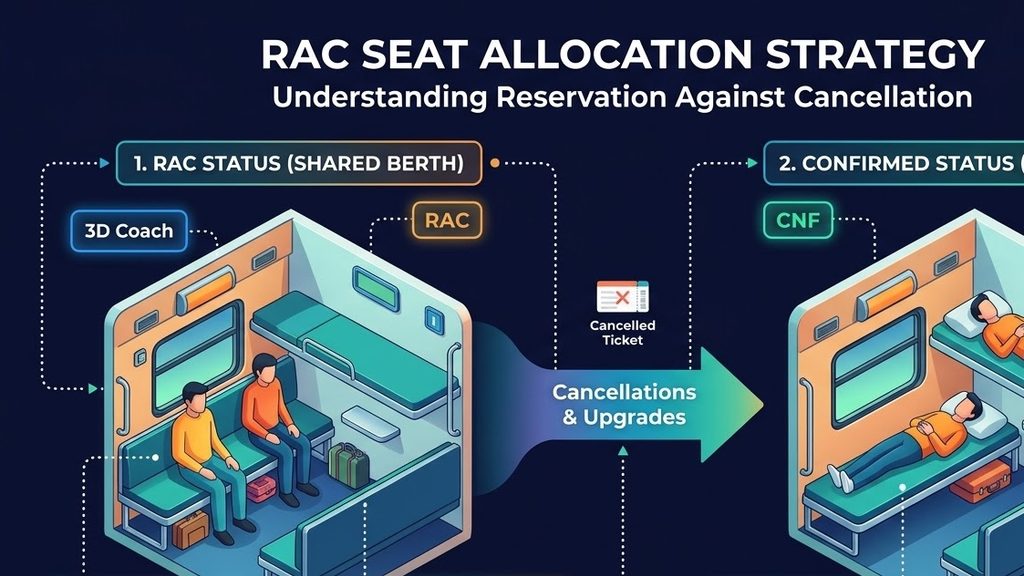
Reservation Against Cancellation, commonly known as RAC, is a railway reservation status. It means a passenger has reserved sitting accommodation but does not yet have a separately confirmed full berth.
The system allows passengers to travel even when all regular sleeping berths have already been reserved. If accommodation becomes available because another passenger cancels a ticket or does not turn up, an RAC passenger may receive a berth according to railway allocation procedures.
One important point is that RAC and a waiting-list ticket are not the same. An RAC passenger has reserved sitting accommodation, whereas a waiting-list passenger is waiting for accommodation to become available.
The Indian Railways Commercial Manual describes RAC passengers as those initially provided reserved sitting accommodation who may receive berths that become vacant. Indian Railways+1
7 Proven Reservation Against Cancellation Rules
Understanding the following seven rules can help passengers avoid confusion and make better travel decisions.
1. RAC Provides Reserved Sitting Accommodation

The first important rule of Reservation Against Cancellation is that RAC provides reserved sitting accommodation. It is not simply an ordinary waiting-list position.
When a passenger receives RAC status, the passenger has a reservation that permits travel under the applicable railway rules. However, the availability of a separate sleeping berth is not guaranteed.
For example, imagine two passengers travelling on the same route. Both have RAC accommodation, but neither has received an individual full berth. Their accommodation is arranged according to the railway’s applicable seating and berth-allocation arrangements.
This is why passengers should understand the difference between reserved sitting accommodation and a confirmed sleeping berth.
An RAC ticket can be useful when confirmed accommodation is unavailable. However, passengers should plan their journey with the understanding that a full berth may not become available.
2. RAC Can Become a Confirmed Berth

One of the most important features of Reservation Against Cancellation is the possibility of receiving a full berth.
When a passenger with a confirmed reservation cancels the ticket, accommodation may become available. Railway authorities can then allot the vacant accommodation to eligible RAC passengers according to the applicable priority and allocation process.
For example, suppose a train has several RAC passengers and one confirmed passenger cancels the reservation. The vacant accommodation may be allotted to an eligible RAC passenger.
However, this does not mean every RAC ticket will automatically become confirmed.
The actual result depends on several factors, including the number of vacant berths, the number of passengers ahead in the RAC queue, railway quotas and other reservation arrangements.
Therefore, passengers should not make travel decisions based only on the expectation of receiving a full berth.
3. RAC and Waiting List Are Different
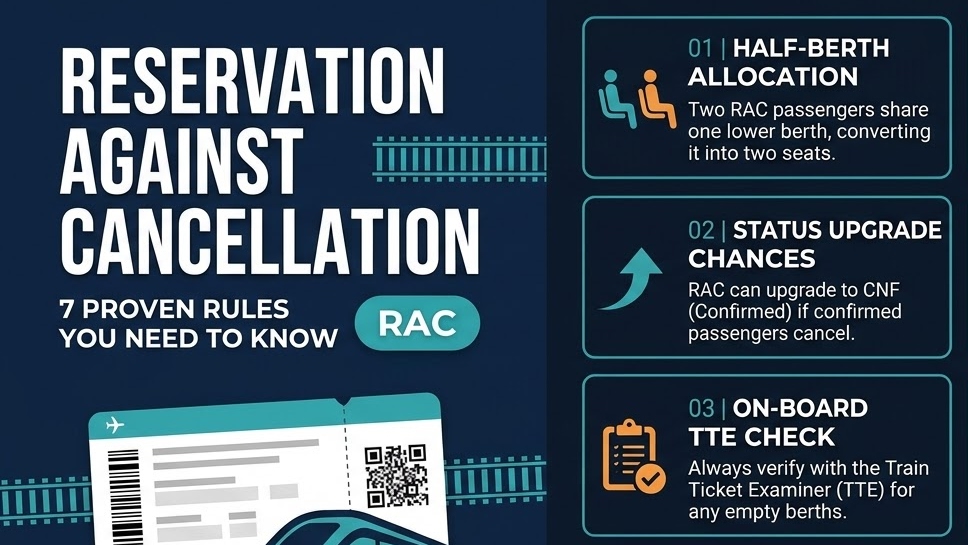
Many passengers consider RAC and waiting-list tickets almost identical. However, there is an important difference between these two reservation statuses.
An RAC passenger has reserved sitting accommodation. A waiting-list passenger has not yet received confirmed or RAC accommodation.
This difference matters when planning a journey.
Consider a simple example. Passenger A has an RAC ticket, while Passenger B has a waiting-list ticket. Passenger A has reserved sitting accommodation, but Passenger B is still waiting for accommodation to become available.
The two passengers therefore have different reservation positions and travel entitlements.
The Indian Railways passenger enquiry system also displays RAC and waiting-list statuses separately. Indian Railways+1
Passengers should always check their actual PNR status instead of assuming that every ticket without a confirmed berth has the same meaning.
4. Check RAC Status Before the Journey

Another important Reservation Against Cancellation rule is to check the latest PNR status before travelling.
The status shown immediately after booking may change as cancellations and reservation updates take place.
For example, a passenger might initially receive RAC status. Later, the status may change depending on available accommodation and railway allocation.
The official Indian Railways PNR enquiry system displays important booking information, including booking status, current status and charting status.
It also explains that the current status may change before the final chart is prepared. Indian Railways
Passengers can follow these practical steps:
- Open the official Indian Railways PNR enquiry website.
- Enter the PNR number printed on the ticket.
- Check the current reservation status.
- Review the coach and berth information, if available.
- Check again after chart preparation.
Do not depend entirely on third-party PNR prediction websites. Predictions are estimates, not guaranteed confirmation.
5. Final Chart Preparation Is Important

Final reservation chart preparation is an important stage of the railway reservation process.
Before the journey, railway authorities prepare reservation charts containing passenger and accommodation details. The status of an RAC passenger may change during this process.
If a suitable berth becomes available, it may be allotted according to the applicable reservation rules.
However, passengers should remember that chart preparation does not guarantee confirmation for every RAC ticket.
If the ticket remains RAC, the passenger should understand that the reserved sitting accommodation continues to apply.
A common mistake is to assume that every RAC ticket will become confirmed when the final chart is prepared. This assumption is incorrect.
The better approach is to check the actual status after chart preparation and make travel arrangements accordingly.
6. RAC Ticket Cancellation Has Specific Refund Rules
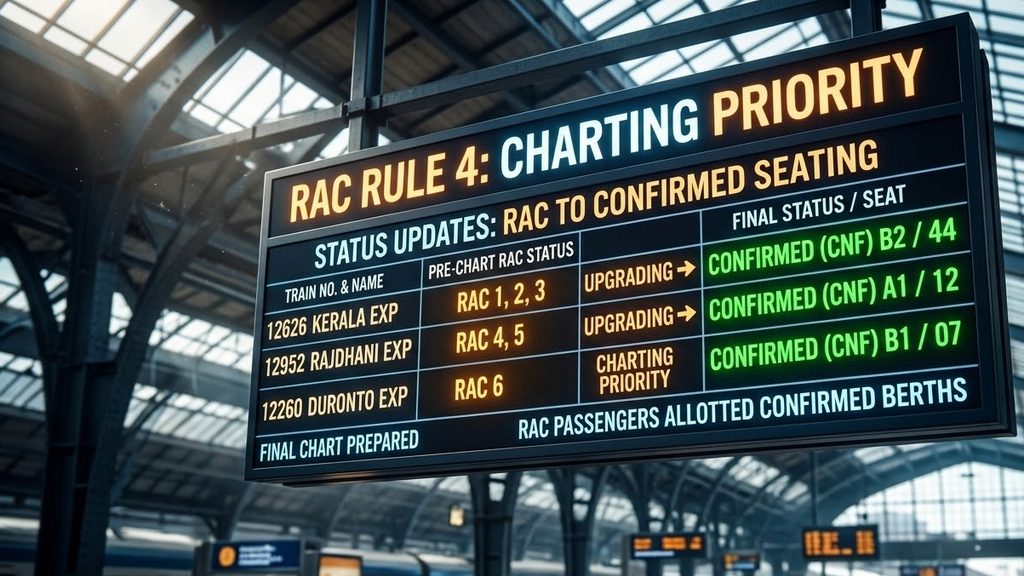
Cancellation is another important part of Reservation Against Cancellation.
Passengers who no longer want to travel should understand the applicable refund conditions before cancelling their tickets.
According to the IRCTC refund rules, RAC and waiting-list tickets are eligible for a refund after deducting the applicable clerkage charge when cancelled up to 30 minutes before the scheduled departure of the train.
The published rules specify a clerkage charge of ₹60 per passenger, with GST applicable for AC classes.
No refund is granted on RAC or waiting-list tickets after the prescribed 30-minute deadline.
There is another important condition. If an RAC passenger receives confirmed reservation before the final chart is prepared, the ticket is treated as a reserved ticket for cancellation purposes. The confirmed-ticket cancellation rules then apply. RefundCancellationRules_19-01-2026
For online tickets, passengers must follow the prescribed online cancellation or TDR procedure.
Therefore, always check the latest refund conditions before cancelling a ticket.
7. A Cancelled Train Has Different Refund Conditions

The seventh important Reservation Against Cancellation rule concerns train cancellation.
Sometimes railway authorities cancel a train because of operational, technical or other circumstances.
In such situations, the refund process may be different from an ordinary passenger-requested cancellation.
According to the published IRCTC rules, when a train is cancelled, the full fare for confirmed or RAC e-tickets is automatically refunded to the account used for booking. Separate online cancellation or TDR filing is not required in this situation.
This is an important distinction because passengers should not confuse train cancellation with cancelling their own RAC reservation.
Always check the official railway notification and refund conditions for the particular situation. RefundCancellationRules_19-01-2026
How Reservation Against Cancellation Works: A Practical Example

Understanding Reservation Against Cancellation becomes easier with a simple example.
Imagine a passenger wants to travel on a busy train. At the time of booking, all regular confirmed berths are unavailable, but RAC accommodation is available.
The passenger books the ticket and receives RAC status.
After some time, another passenger cancels a confirmed reservation. A berth becomes vacant.
The railway reservation system may then allot the available accommodation to an eligible RAC passenger according to the applicable allocation procedure.
If the passenger receives a full berth, the reservation status can change accordingly.
However, if no suitable accommodation becomes available, the passenger may continue with RAC sitting accommodation.
This example explains why RAC confirmation depends on actual availability rather than a guaranteed timeline.
What Factors Affect RAC Confirmation?
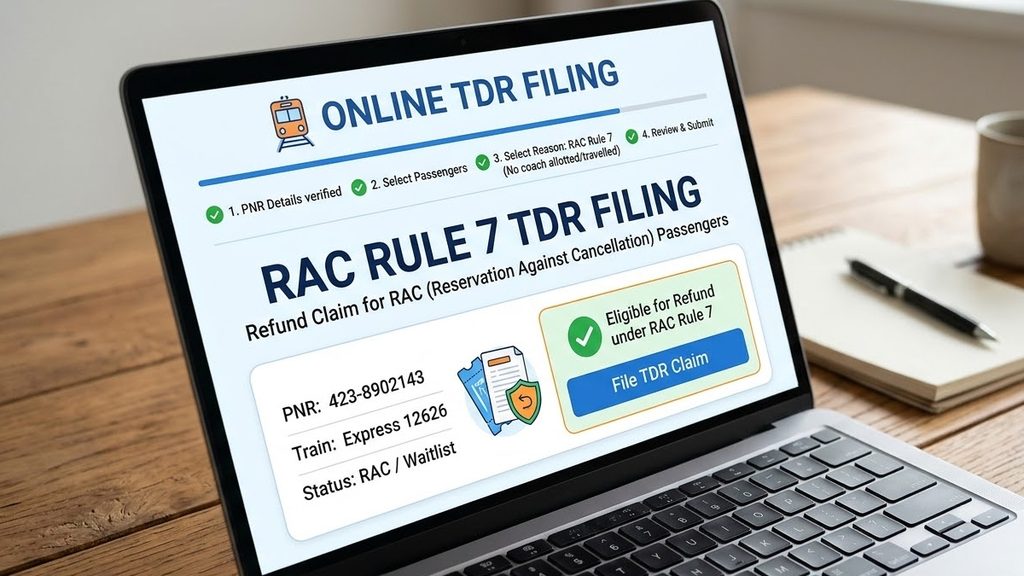
There is no single fixed factor that determines whether an RAC ticket will become confirmed. Several circumstances can affect the final result.
Passenger Cancellations
When confirmed passengers cancel their reservations, accommodation may become available for RAC passengers. This is one of the main reasons RAC status can improve.
Number of RAC Passengers
The number of passengers ahead in the RAC allocation sequence can affect the chances of receiving a full berth.
A passenger should not consider the RAC number alone as a guaranteed prediction.
Train and Route Demand
Popular routes and busy travel periods can have different reservation patterns. When demand is high, available accommodation may be limited.
Quotas and Accommodation Availability
Railway reservation arrangements include different quotas and accommodation allocations. Changes in availability can influence the final reservation position.
Passenger No-Shows
If a reserved passenger does not turn up, accommodation may become available under the applicable railway procedures. The railway’s commercial manual also describes the allotment of accommodation that becomes available because reserved passengers do not turn up. Indian Railways
RAC Ticket vs Confirmed Ticket vs Waiting List
Understanding these three reservation statuses is essential before booking a train ticket.
| Feature | Confirmed | RAC | Waiting List |
|---|---|---|---|
| Reservation status | Confirmed | Reserved sitting accommodation | Awaiting accommodation |
| Full berth | Allotted | Not guaranteed | Not allotted |
| Travel entitlement | Yes | Yes, under applicable rules | Depends on ticket type and final status |
| Further confirmation | Already confirmed | May receive a full berth | May move to RAC or confirmed |
| Main concern | Cancellation conditions | Berth availability | Final reservation status |
The most important difference is the accommodation provided.
A confirmed ticket provides confirmed reserved accommodation. An RAC ticket provides reserved sitting accommodation, with the possibility of receiving a full berth. A waiting-list ticket has not yet received RAC or confirmed accommodation.
For electronic tickets, passengers should also check the applicable rules if the ticket remains fully waitlisted after chart preparation.
Common Mistakes Passengers Should Avoid
Even though Reservation Against Cancellation provides an opportunity to travel, passengers sometimes misunderstand its conditions.
Here are some common mistakes worth avoiding.
Assuming RAC means a full berth: RAC provides reserved sitting accommodation, not an automatic full sleeping berth.
Ignoring the final PNR status: The booking status can change. Always check the latest status before departure.
Depending on prediction websites: PNR predictions are estimates. Actual confirmation depends on railway allocation.
Cancelling without checking refund conditions: Cancellation charges depend on the ticket status and cancellation timing.
Confusing RAC with a waiting-list ticket: Both have different reservation conditions and travel arrangements.
Assuming every vacant berth will be allotted immediately: Allocation follows applicable railway procedures. Passengers should not expect every vacancy to result in immediate confirmation.
How to Improve Your Chances of Getting a Confirmed Berth
There is no guaranteed method to convert an RAC ticket into a confirmed berth. However, passengers can make more informed booking decisions.
Book Earlier When Possible
Booking early can help passengers access available reservation accommodation before demand increases.
Check Alternative Trains
If one train has limited availability, check other trains operating on the same route. An alternative train may have better reservation availability.
Compare Different Travel Dates
When travel dates are flexible, compare nearby dates. Some trains and dates may have different accommodation availability.
Monitor Your PNR
Check your PNR periodically, especially before chart preparation. This helps you understand whether your reservation status has changed.
Keep a Backup Travel Plan
For important journeys, avoid depending entirely on the possibility of RAC confirmation. Consider alternative trains or travel dates where practical.
These steps cannot guarantee a confirmed berth, but they can help passengers make better decisions.
Important RAC Refund Conditions You Should Know
Refund conditions are an important part of railway reservation planning.
The following points explain some situations covered by the published IRCTC rules.
- RAC tickets cancelled up to 30 minutes before scheduled departure are eligible for a refund after applicable clerkage deductions.
- No refund is granted on RAC tickets cancelled after the prescribed deadline.
- If RAC accommodation becomes confirmed before final chart preparation, confirmed-ticket cancellation charges apply.
- Cancelled trains have separate refund provisions for eligible e-tickets.
- Partially confirmed family or party tickets have specific cancellation and TDR conditions.
Passengers should refer to the latest official refund document because rules and charges can change. RefundCancellationRules_19-01-2026+1
Frequently Asked Questions About Reservation Against Cancellation
1. What does Reservation Against Cancellation mean?
Reservation Against Cancellation means a passenger has reserved sitting accommodation but has not received a separately confirmed full berth. The passenger may receive a full berth if accommodation becomes available under railway allocation rules.
2. Can an RAC ticket become confirmed?
Yes. An RAC ticket can become confirmed if suitable accommodation becomes available. However, confirmation is not guaranteed and depends on railway reservation conditions.
3. Can passengers travel with an RAC ticket?
Yes. RAC passengers have reserved sitting accommodation and can travel under the applicable railway rules. They do not need to wait for a full berth to be allotted before travelling.
4. What is the difference between RAC and a waiting-list ticket?
An RAC ticket provides reserved sitting accommodation. A waiting-list ticket is awaiting accommodation. These statuses have different travel and reservation conditions.
5. What happens if an RAC ticket does not get confirmed?
If the ticket remains RAC, the passenger retains the applicable reserved sitting accommodation. A full sleeping berth is not guaranteed.
6. Can I cancel my RAC ticket and get a refund?
Yes. Under the published IRCTC rules, an RAC ticket cancelled up to 30 minutes before scheduled departure is eligible for a refund after applicable clerkage deductions. The rules differ if the ticket becomes confirmed.
7. How can I check my RAC ticket status?
Visit the official Indian Railways PNR enquiry website and enter your PNR number. You can check the latest reservation status, coach details and charting information.
Additional Practical Guide to Reservation Against Cancellation
How to Read an RAC Ticket Correctly
A railway ticket contains several details that passengers should understand before starting their journey. These details help identify the reservation status and available accommodation.
The most important information is the PNR number, train number, journey date, passenger details, booking status and current status.
Booking Status: This shows the reservation position when the ticket was originally booked.
Current Status: This shows the latest available reservation position. It may change before the final chart is prepared.
Coach and Berth Details: These details help passengers identify their allotted accommodation when available.
RAC Number: This indicates the RAC position associated with the reservation.
For example, if the booking status and current status are different, it means the reservation position has changed since booking. Therefore, passengers should pay attention to the current status rather than relying only on the original booking information.
What Happens When Multiple RAC Passengers Are Travelling?
When several passengers have RAC reservations in the same train, the railway system manages their accommodation according to the applicable reservation arrangements.
The availability of a full berth depends on the accommodation released and the allocation sequence. If one berth becomes available, it does not mean every RAC passenger will receive a separate berth.
This is an important point because passengers sometimes expect their RAC status to improve automatically as the departure date approaches.
In reality, the number of available berths and the number of passengers awaiting accommodation both matter.
Passengers should also understand that different coaches and reservation arrangements can affect accommodation allocation. Therefore, one passenger’s RAC experience may not be exactly the same as another passenger’s experience.
Is RAC Better Than a Waiting-List Ticket?
In terms of reserved accommodation and travel eligibility, RAC generally provides a more certain position than a fully waitlisted ticket.
An RAC passenger has reserved sitting accommodation. A fully waitlisted e-ticket that remains waitlisted after chart preparation is subject to different rules and cannot be used for boarding as a confirmed or RAC reservation.
For this reason, passengers should understand the difference before selecting a ticket.
However, RAC does not mean that a full sleeping berth is guaranteed. Someone who needs a separate berth should consider this limitation before booking.
Special Situations Related to Reservation Against Cancellation
What Happens If an RAC Ticket Is Partially Confirmed?
Sometimes passengers book multiple tickets under one PNR. The reservation status of every passenger may not remain the same.
For example, a family books tickets for four passengers. Before chart preparation, two passengers receive confirmed berths while the remaining two continue with RAC status.
This is called a partially confirmed reservation.
In such situations, passengers should check the individual status of every traveller. They should not assume that all passengers have received the same accommodation simply because they share one PNR.
IRCTC also has specific cancellation and refund conditions for party and family e-tickets containing confirmed, RAC and waitlisted passengers. RefundCancellationRules_19-01-2026+1
What Happens to a Fully Waitlisted E-Ticket After Chart Preparation?
A fully waitlisted e-ticket is different from an RAC e-ticket.
If every passenger on an e-ticket remains waitlisted after chart preparation, their names are dropped from the reservation chart and they are not permitted to board the train using that ticket.
IRCTC arranges the applicable refund according to railway rules.
However, if an e-ticket is partly confirmed or partly RAC and partly waitlisted, different provisions apply. Passengers should check the status of each traveller before departure. IRCTC Contents+1
Can an RAC Passenger Receive a Full Berth During the Journey?
Yes, a suitable berth may become available during the journey under applicable railway procedures.
For example, a passenger with a confirmed reservation may not turn up at the boarding station. Accommodation may then become available for allotment.
However, passengers should not independently assume that an empty-looking berth is available for their use.
The train’s authorised ticket checking staff handles accommodation-related matters according to railway rules.
The Indian Railways Commercial Manual specifically discusses the possibility of RAC passengers receiving berths that become vacant because of last-minute cancellations or passengers not turning up. Indian Railways
Important Documents to Carry During an RAC Journey
Passengers should keep their travel documents ready, whether they have a confirmed or RAC reservation.
The following information is useful:
- Valid railway ticket or electronic reservation slip.
- Original authorised identity document, as applicable.
- PNR number for reservation enquiries.
- Train number and journey details.
- Coach and accommodation information, when allotted.
For e-ticket passengers, carrying an authorised identity document is particularly important. The identity requirements should be checked on the official IRCTC website.
How to Avoid Confusion During RAC Travel
A little preparation can make the journey easier. Passengers should understand their reservation status instead of depending on assumptions.
First, check the PNR after booking. Next, monitor any changes before departure. Once the reservation chart is prepared, check the final status and allotted accommodation.
If any confusion remains, ask authorised railway staff rather than relying on information from unofficial websites or other passengers.
Also, remember that an RAC reservation and a confirmed berth are two different things. Understanding this difference is the simplest way to avoid unrealistic expectations.
Advanced RAC Reservation Questions and Practical Answers
Can RAC Passengers Change Their Boarding Station?
Passengers may be able to change their boarding station under applicable Indian Railways rules and prescribed procedures. However, the request must meet the railway’s conditions and deadlines.
Passengers should check the official IRCTC facilities before making changes. They should not assume that changing a boarding station automatically changes their berth allocation or reservation status.
Does RAC Status Guarantee Travel?
Yes. An RAC ticket provides reserved sitting accommodation and permits the passenger to travel in the reserved coach under applicable rules.
This is an important difference between RAC and a fully waitlisted e-ticket. If a fully waitlisted e-ticket remains waitlisted after chart preparation, it cannot be used to board the reserved coach.
Can RAC Status Change After Chart Preparation?
A reservation status may change during the journey if accommodation becomes available. Railway staff can allot vacant berths to eligible RAC passengers according to applicable procedures.
Passengers should check their latest PNR information and follow instructions from authorised railway staff.
What Does R# Mean in PNR Status?
Indian Railways uses the notation R# to indicate RAC coach and berth information in its PNR enquiry system.
The exact coach and seat information should be checked using the official PNR enquiry facility.
What Should Passengers Do If Their RAC Accommodation Is Not Clear?
If a passenger cannot identify the allotted sitting accommodation, they should contact the authorised ticket checking staff or railway enquiry personnel.
They should keep their ticket and valid identity document available for verification.
Understanding the Most Important RAC Terms
| Railway Term | Meaning |
|---|---|
| RAC | Reservation Against Cancellation |
| CNF | Confirmed reservation |
| WL | Waiting List |
| PNR | Passenger Name Record |
| TTE | Travelling Ticket Examiner |
| TDR | Ticket Deposit Receipt |
| Chart Prepared | Reservation chart has been prepared |
| Current Status | Latest available reservation position |
These terms make it easier to understand railway reservation information and avoid confusion while checking a ticket.
Official Websites for Checking RAC Information
Passengers should prefer official railway sources for reservation information.
Indian Railways PNR Enquiry: Check PNR Status
Indian Railways Reservation Rules: Read Official Reservation and Refund Rules
IRCTC Refund Rules: Read Official Refund Conditions
Indian Railways Commercial Information: Read Reservation Rules
More Important Reservation Against Cancellation Rules Every Passenger Should Understand
What Happens If a Passenger Misses the Boarding Station?
An RAC passenger should reach the boarding station on time and follow the reservation details shown on the ticket. Missing the boarding station can create problems, especially when the passenger expects to receive a full berth later.
If a passenger does not arrive, railway staff may handle the vacant accommodation according to applicable railway procedures. Therefore, passengers should not assume that an allotted seat or berth will remain available indefinitely.
The safest approach is to reach the station before departure and contact authorised railway staff if there is any difficulty with boarding.
Can Passengers Get a Refund If the Train Is More Than Three Hours Late?
Indian Railways provides specific refund provisions when a train is delayed by more than three hours and the passenger does not undertake the journey.
For eligible reserved, RAC and waitlisted tickets, a full refund may be available without cancellation charges or clerkage, subject to the prescribed conditions.
For an e-ticket, the passenger must file the required TDR online before the actual departure of the train.
This is different from ordinary RAC cancellation. Passengers should check the official conditions before submitting a refund request. Refund Rules+1
What Happens If an RAC Ticket Is Lost?
Losing a railway ticket can create unnecessary difficulties during a journey.
According to the published railway rules, a passenger with a lost or misplaced ticket may request a duplicate ticket subject to applicable conditions and charges.
However, the conditions depend on the reservation status and whether the reservation chart has already been prepared.
The official railway rules also distinguish between lost tickets and torn or damaged tickets. Therefore, passengers should contact the reservation office immediately rather than assuming that a duplicate ticket will always be available. Indian Railways+1
What Is the Difference Between RAC Cancellation and TDR Filing?
RAC cancellation and TDR filing are related to obtaining refunds, but they are not identical procedures.
RAC cancellation is the process of cancelling a reservation that has RAC status. TDR, or Ticket Deposit Receipt, is an online claim procedure used in situations where a refund must be requested under specific railway conditions.
For example, when an e-ticket’s reservation chart has already been prepared, the normal online cancellation facility is not available. An eligible refund claim may require online TDR filing.
Passengers should select the correct reason when submitting a TDR because the railway administration examines the claim under the relevant rules. IRCTC Contents+1
Updated RAC Refund Example
Consider a passenger who has booked an RAC ticket but later decides not to travel.
Under the published IRCTC rules, the passenger may cancel the RAC reservation up to 30 minutes before scheduled train departure, subject to the applicable clerkage deduction.
The published clerkage is ₹60 per passenger, with GST applicable for AC classes.
If the passenger waits beyond the prescribed deadline, the normal RAC refund is not available.
This example shows why understanding cancellation timing is important. Passengers should always verify the latest applicable conditions before making a cancellation decision. RefundCancellationRules_19-01-2026
Important Official Rule Updates
Railway reservation and refund policies can change through official notifications and commercial circulars.
For this reason, information copied from old railway guides may not always reflect current procedures.
Before publishing or relying on information about Reservation Against Cancellation, verify:
- Current RAC cancellation deadlines.
- Applicable clerkage and GST.
- E-ticket TDR procedures.
- Partially confirmed ticket conditions.
- Train cancellation refund provisions.
- Rules for delayed trains.
The official IRCTC refund document and Indian Railways commercial circulars should take priority over unofficial explanations.
Conclusion: Understand RAC Before Your Next Journey
Reservation Against Cancellation is an important railway reservation facility that helps passengers obtain reserved sitting accommodation when confirmed berths are unavailable.
However, passengers should understand that RAC does not guarantee a separate full sleeping berth. The availability of a berth depends on cancellations, vacant accommodation and railway allocation procedures.
The seven rules explained in this guide cover the most important aspects of RAC, including reserved sitting accommodation, berth confirmation, PNR checking, chart preparation, cancellation and refunds.
My main recommendation is simple: understand your ticket status before travelling, check the official PNR enquiry system and never depend entirely on confirmation predictions.
A little knowledge before booking can prevent unnecessary confusion during your journey.
Before your next train journey, check your PNR status and understand your reservation conditions.
AFFILIATE- https://link.amazon/B04dH3cP0
REFRANCE- Reservation Against Cancellation 7 Proven Rules Reservation Against Cancellation 7 Proven Rules Reservation Against Cancellation 7 Proven Rules Reservation Against Cancellation 7 Proven Rules Reservation Against Cancellation 7 Proven Rules Reservation Against Cancellation 7 Proven Rules Reservation Against Cancellation 7 Proven Rules Reservation Against Cancellation 7 Proven Rules Reservation Against Cancellation 7 Proven Rules
Reservation Against Cancellation 7 Proven Rules Reservation Against Cancellation 7 Proven Rules Reservation Against Cancellation 7 Proven Rules Reservation Against Cancellation 7 Proven Rules Reservation Against Cancellation 7 Proven Rules Reservation Against Cancellation 7 Proven Rules Reservation Against Cancellation 7 Proven Rules Reservation Against Cancellation 7 Proven Rules Reservation Against Cancellation 7 Proven Rules
Reservation Against Cancellation 7 Proven Rules Reservation Against Cancellation 7 Proven Rules Reservation Against Cancellation 7 Proven Rules Reservation Against Cancellation 7 Proven Rules Reservation Against Cancellation 7 Proven Rules Reservation Against Cancellation 7 Proven Rules Reservation Against Cancellation 7 Proven Rules Reservation Against Cancellation 7 Proven Rules Reservation Against Cancellation 7 Proven Rules
Reservation Against Cancellation 7 Proven Rules Reservation Against Cancellation 7 Proven Rules Reservation Against Cancellation 7 Proven Rules Reservation Against Cancellation 7 Proven Rules Reservation Against Cancellation 7 Proven Rules Reservation Against Cancellation 7 Proven Rules Reservation Against Cancellation 7 Proven Rules Reservation Against Cancellation 7 Proven Rules Reservation Against Cancellation 7 Proven Rules
Reservation Against Cancellation 7 Proven Rules Reservation Against Cancellation 7 Proven Rules Reservation Against Cancellation 7 Proven Rules Reservation Against Cancellation 7 Proven Rules Reservation Against Cancellation 7 Proven Rules Reservation Against Cancellation 7 Proven Rules Reservation Against Cancellation 7 Proven Rules Reservation Against Cancellation 7 Proven Rules Reservation Against Cancellation 7 Proven Rules
Reservation Against Cancellation 7 Proven Rules Reservation Against Cancellation 7 Proven Rules Reservation Against Cancellation 7 Proven Rules Reservation Against Cancellation 7 Proven Rules Reservation Against Cancellation 7 Proven Rules Reservation Against Cancellation 7 Proven Rules Reservation Against Cancellation 7 Proven Rules Reservation Against Cancellation 7 Proven Rules Reservation Against Cancellation 7 Proven Rules
1 thought on “Reservation Against Cancellation 7 Proven Rules”