
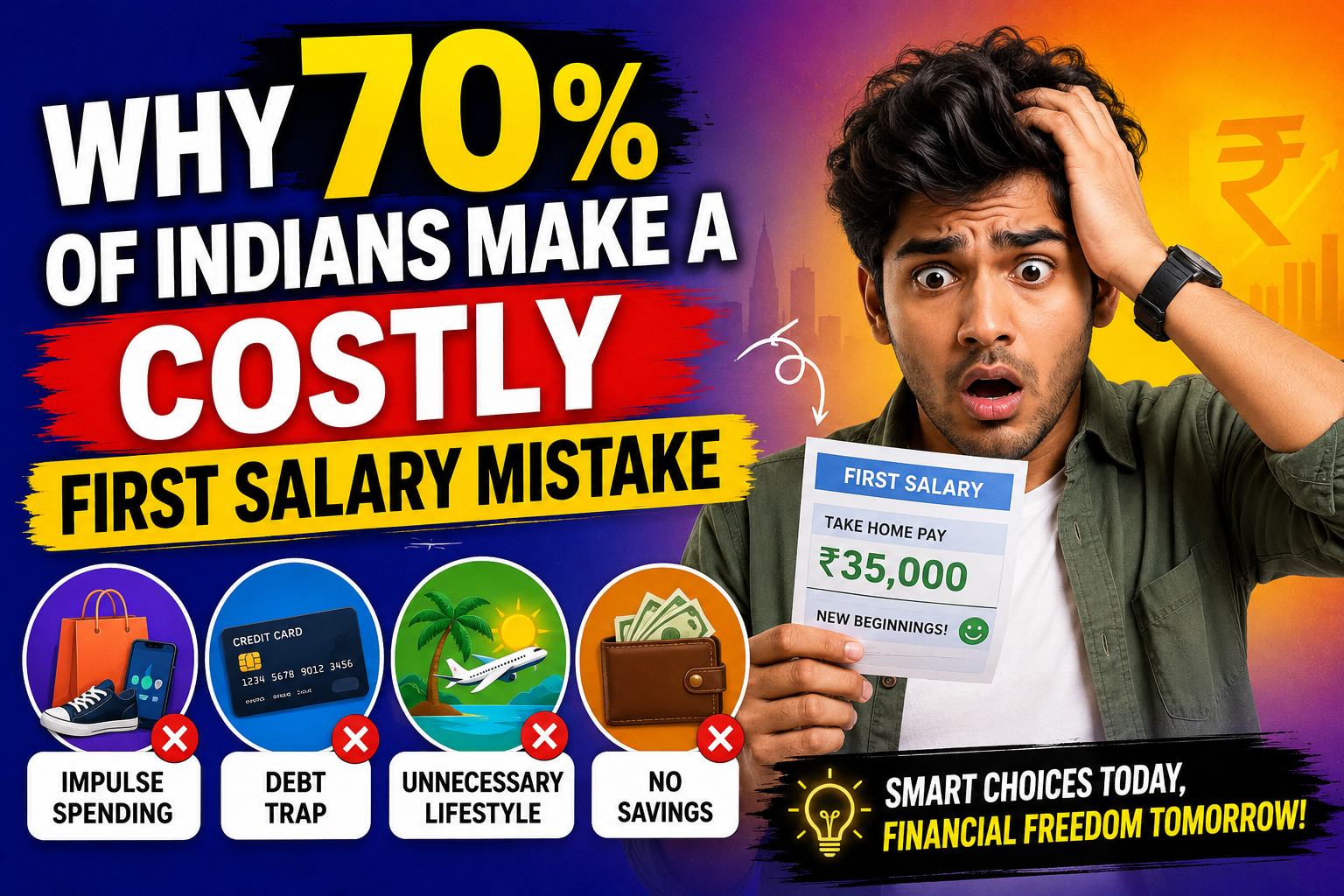
Trusted First Salary Mistakes 2026-Why 70% Of Indians Make A Costly First Salary Mistake-Why 70 Percent Of Indians Make 1 Terrible Mistake With Their First Salary is a question every young professional should understand before receiving their first paycheck. For many people, the first salary is an emotional milestone. It represents years of education, hard work, sacrifices, and dreams finally turning into reality. The excitement of seeing that first salary credited into the bank account is difficult to describe. However, this excitement often leads to poor financial decisions that can impact wealth creation for years.
I have personally seen many young professionals spend their first salary on expensive gadgets, luxury dinners, branded clothes, and impulsive purchases. While celebrating success is completely normal, the real problem begins when spending becomes a habit and financial planning gets postponed. Understanding Why 70 Percent Of Indians Make 1 Terrible Mistake With Their First Salary can help you avoid the same trap and build a stronger financial future from day one.
Table of Contents
Trusted First Salary Mistakes 2026-Why 70 Percent Of Indians Make 1 Terrible Mistake With Their First Salary

The biggest reason behind this mistake is the lack of financial education. Schools and colleges teach mathematics, science, and technology, but very few teach practical money management. As a result, most people start earning without understanding budgeting, investing, emergency funds, or wealth creation.
When the first salary arrives, people usually focus on rewards instead of planning. They believe they deserve to enjoy the money because they worked hard for it. There is nothing wrong with enjoying your earnings. The problem appears when enjoyment consumes the entire salary and nothing is left for savings or investments.
Many young employees also experience social pressure. Friends may encourage expensive outings. Social media may create the desire to buy the latest smartphone, branded accessories, or luxury products. Gradually, spending becomes a priority while financial security gets ignored.
This is exactly why understanding Why 70 Percent Of Indians Make 1 Terrible Mistake With Their First Salary is important. The earlier you recognize this pattern, the easier it becomes to avoid it.
Trusted First Salary Mistakes 2026-The Psychology Behind First Salary Spending
The first salary creates a strong emotional response. After years of depending on parents or guardians, receiving your own income feels empowering. Many people want to prove their success immediately through spending.
I have noticed that new employees often compare themselves with colleagues who have been earning for years. Instead of building financial stability, they attempt to match lifestyles they cannot yet afford.
This behavior leads to unnecessary purchases such as:
- Premium smartphones
- Expensive watches
- Luxury fashion products
- Frequent dining out
- Unplanned vacations
- Multiple subscriptions
Although these purchases provide temporary happiness, they rarely contribute to long-term financial growth.
Therefore, Why 70 Percent Of Indians Make 1 Terrible Mistake With Their First Salary is often linked more to emotions than mathematics.
Trusted First Salary Mistakes 2026-Why 70% Of Indians Make A Costly First Salary Mistake-The Biggest Financial Mistake Most People Make
The most common mistake is simple.
People spend first and save later.
Successful wealth creators do the opposite.
They save first and spend later.
This difference may sound small, but it completely changes financial outcomes.
Imagine receiving a salary of ₹40,000 per month. If you immediately allocate ₹8,000 towards savings and investments, you learn discipline from the beginning. However, if you spend freely and save whatever remains, there is often nothing left at the end of the month.
Financial experts frequently recommend paying yourself first. This means setting aside money for savings and investments before making discretionary purchases.
Following this simple rule can help you avoid Why 70 Percent Of Indians Make 1 Terrible Mistake With Their First Salary.
Trusted First Salary Mistakes 2026-Why 70% Of Indians Make A Costly First Salary Mistake- How Delaying Investments Costs Lakhs Of Rupees
One of the hidden consequences of the first salary mistake is delayed investing.
Many people think they will start investing after getting a salary increase. Unfortunately, that increase often leads to higher spending rather than higher investing.
Consider two individuals.
The first person starts investing ₹5,000 per month at age 22.
The second person waits until age 30.
Even if both invest similar amounts later, the first investor usually accumulates significantly more wealth due to compounding.
Compounding allows money to generate returns, and those returns generate additional returns. Over time, this effect becomes extremely powerful.
I have seen numerous examples where early investors built larger portfolios despite investing smaller amounts compared to people who started later.
This is another reason Why 70 Percent Of Indians Make 1 Terrible Mistake With Their First Salary can become expensive in the long run.
Trusted First Salary Mistakes 2026-Why An Emergency Fund Matters
Many young earners focus entirely on spending and investing while ignoring emergency savings.
An emergency fund acts as a financial safety net.
Unexpected situations may include:
- Medical emergencies
- Job loss
- Family emergencies
- Urgent travel expenses
- Home repairs
- Vehicle repairs
Without emergency savings, people often rely on credit cards or personal loans.
Debt creates additional financial pressure and can delay wealth creation.
A practical target is saving three to six months of essential expenses in a liquid account.
Creating this fund early helps prevent financial stress and supports long-term stability.
Trusted First Salary Mistakes 2026-Why 70% Of Indians Make A Costly First Salary Mistake-The Power Of Starting SIPs Early
Systematic Investment Plans are among the most effective tools available for beginners.
SIPs encourage disciplined investing and help investors benefit from rupee cost averaging.
A young professional who starts a SIP with the first salary gains a significant advantage because time becomes an ally.
Even a modest monthly investment can grow substantially over decades.
I have personally observed that individuals who begin SIPs early often feel more financially confident because they know their money is working for them.
This simple habit directly addresses Why 70 Percent Of Indians Make 1 Terrible Mistake With Their First Salary and offers a practical solution.
Trusted First Salary Mistakes 2026-Why 70% Of Indians Make A Costly First Salary Mistake-Lifestyle Inflation: The Silent Wealth Destroyer
Lifestyle inflation occurs when spending rises every time income increases.
Many people receive salary hikes but fail to improve their financial position because expenses increase at the same rate.
Examples include:
- Upgrading phones unnecessarily
- Choosing expensive apartments
- Buying vehicles beyond budget
- Increasing entertainment expenses
- Spending more on luxury products
While occasional upgrades are fine, constant lifestyle inflation can reduce long-term wealth significantly.
The smartest earners increase investments whenever income rises.
Instead of spending every additional rupee, they allocate a portion toward financial goals.
This strategy helps avoid Why 70 Percent Of Indians Make 1 Terrible Mistake With Their First Salary and creates sustainable wealth growth.
Trusted First Salary Mistakes 2026-Why 70% Of Indians Make A Costly First Salary Mistake-Real-Life Example Of Two Different Paths
Consider two friends who start their careers together.
Both earn ₹45,000 per month.
The first friend spends almost everything on gadgets, dining, shopping, and entertainment.
The second friend follows a simple plan:
- 20% savings
- Emergency fund creation
- SIP investments
- Controlled spending
After five years, the difference becomes dramatic.
The first individual may still be living paycheck to paycheck.
The second individual may have a healthy investment portfolio, emergency fund, and greater financial confidence.
The difference is not income.
The difference is behavior.
This example perfectly illustrates Why 70 Percent Of Indians Make 1 Terrible Mistake With Their First Salary.
Trusted First Salary Mistakes 2026-Why 70% Of Indians Make A Costly First Salary Mistake-A Simple First Salary Formula That Actually Works
When people receive their first salary, they often look for complicated financial advice. In reality, a simple system is usually more effective. One practical framework is the 50-30-20 rule. Under this method, 50% of income goes toward necessities such as rent, transportation, and food. Around 30% can be used for personal wants and lifestyle spending. The remaining 20% should be directed toward savings and investments.
For example, if your monthly salary is ₹50,000, you can allocate ₹25,000 for essential expenses, ₹15,000 for discretionary spending, and ₹10,000 for wealth-building activities. This structure creates balance because it allows you to enjoy your earnings while also preparing for the future.
I have noticed that people who follow a predefined system make fewer emotional decisions. They do not need to wonder whether they should spend or save because the allocation is already decided. This removes uncertainty and helps build financial discipline. One of the biggest lessons behind Why 70 Percent Of Indians Make 1 Terrible Mistake With Their First Salary is that financial success rarely depends on earning more. Instead, it depends on managing money wisely from the very beginning.
Trusted First Salary Mistakes 2026-Why 70% Of Indians Make A Costly First Salary Mistake-Why Budgeting Is More Important Than Income
Many young professionals believe higher income automatically solves financial problems. However, reality often proves otherwise. There are individuals earning ₹30,000 per month who maintain healthy savings, while others earning ₹1 lakh per month struggle financially.
The reason is budgeting.
A budget gives every rupee a purpose. Without a budget, money tends to disappear on small purchases that seem insignificant individually but become substantial collectively. Daily coffee orders, frequent food deliveries, impulse shopping, and entertainment subscriptions can quietly consume a large portion of income.
Tracking expenses for even one month can be eye-opening. Most people discover spending patterns they were completely unaware of. Once these patterns become visible, it becomes easier to make improvements.
Understanding Why 70 Percent Of Indians Make 1 Terrible Mistake With Their First Salary means recognizing that uncontrolled spending is often the real issue. Budgeting provides clarity and control, making it easier to achieve long-term goals without sacrificing present enjoyment.
Trusted First Salary Mistakes 2026-Why 70% Of Indians Make A Costly First Salary Mistake-Financial Habits That Create Wealth Early
Building wealth does not require extraordinary intelligence or luck. It usually depends on a few consistent habits repeated over many years.
Some of the most effective habits include:
Automating Savings
Automation removes the temptation to spend money intended for future goals. Setting up automatic transfers to savings accounts or SIPs ensures consistency.
Tracking Every Expense
Recording expenses helps identify unnecessary spending and encourages better decisions.
Increasing Investments After Every Increment
Whenever income rises, increasing investment contributions can accelerate wealth creation significantly.
Avoiding High-Interest Debt
Credit card debt can destroy financial progress because interest charges grow rapidly.
Learning About Personal Finance
Reading books, articles, and expert insights can improve decision-making and financial confidence.
These habits may appear simple, but their long-term impact is extraordinary. They also address the core issue behind Why 70 Percent Of Indians Make 1 Terrible Mistake With Their First Salary.
Trusted First Salary Mistakes 2026-The Hidden Cost Of Showing Off
One financial trap that affects many young earners is the desire to impress others. Social media often creates unrealistic expectations. People see luxury vacations, expensive gadgets, and premium lifestyles without seeing the financial reality behind those images.
As a result, some individuals begin spending money they cannot afford to spend.
I have personally seen people purchase expensive phones using EMIs immediately after receiving their first salary. Others upgrade their wardrobes or spend heavily on parties because they feel successful and want others to notice.
Unfortunately, many of these purchases lose value quickly. The excitement fades, but the financial consequences remain.
True financial success is not about appearing wealthy. It is about becoming wealthy. Understanding this distinction can help prevent Why 70 Percent Of Indians Make 1 Terrible Mistake With Their First Salary from affecting your future.
Trusted First Salary Mistakes 2026-Why 70% Of Indians Make A Costly First Salary Mistake-Why Parents Often Give The Best Financial Advice
Many young professionals underestimate the value of financial lessons from parents. While financial markets and investment options have evolved, certain money principles remain timeless.
Parents often emphasize:
- Living within your means
- Saving before spending
- Avoiding unnecessary debt
- Planning for emergencies
- Thinking long term
These principles may sound basic, but they form the foundation of financial security.
I have heard numerous successful investors mention that their strongest financial habits originated from family values rather than investment strategies. Combining traditional wisdom with modern financial tools can create a powerful wealth-building approach.
This perspective helps explain Why 70 Percent Of Indians Make 1 Terrible Mistake With Their First Salary despite having access to more financial information than any previous generation.
The First Salary Investment Roadmap
A practical investment roadmap can help beginners take action immediately.
Step 1: Build Emergency Savings
Create a financial cushion covering at least three months of expenses.
Step 2: Start A SIP
Choose a diversified mutual fund and invest consistently.
Step 3: Get Health Insurance
Medical emergencies can disrupt financial plans quickly.
Step 4: Learn Basic Investing
Understand concepts such as risk, diversification, inflation, and compounding.
Step 5: Increase Contributions Annually
Whenever income grows, increase investments proportionally.
Following this roadmap allows young professionals to avoid Why 70 Percent Of Indians Make 1 Terrible Mistake With Their First Salary and establish strong financial foundations.
A Case Study Of Long-Term Impact
Imagine two graduates starting careers at age 22.
The first graduate spends most of the first salary and postpones investing for several years.
The second graduate invests ₹5,000 monthly from the beginning and increases contributions gradually.
After 15 years, the difference can be remarkable. Due to compounding and disciplined investing, the second graduate may accumulate several times more wealth despite having similar income levels.
This outcome demonstrates that financial success is often determined by early habits rather than extraordinary investment skills.
The earlier good habits begin, the more powerful their impact becomes. This is why understanding Why 70 Percent Of Indians Make 1 Terrible Mistake With Their First Salary is so important for long-term financial growth.
Trusted First Salary Mistakes 2026-Warning Signs You Are Repeating The First Salary Mistake
Several warning signs indicate that financial habits need improvement.
- Saving only when money is left over
- Frequently using credit cards for non-essential purchases
- Having no emergency fund
- Ignoring investments
- Increasing expenses after every salary hike
- Living paycheck to paycheck
If any of these signs sound familiar, it is not too late to make changes. Financial improvement starts with awareness and small consistent actions.
Many people assume wealth creation requires major sacrifices. In reality, small adjustments made consistently often produce the greatest results.
Trusted First Salary Mistakes 2026-Why 70% Of Indians Make A Costly First Salary Mistake-The Mindset Shift That Changes Everything
The most successful investors think differently about money.
Instead of asking, “What can I buy with this salary?” they ask, “How can this salary improve my future?”
This simple mindset shift influences every financial decision.
When income is viewed as a tool rather than a reward, priorities begin to change. Savings become important. Investments become exciting. Long-term planning becomes natural.
I have found that individuals who adopt this perspective often experience less financial stress because they know their money is working toward meaningful goals.
This mindset is one of the strongest solutions to Why 70 Percent Of Indians Make 1 Terrible Mistake With Their First Salary.
Trusted First Salary Mistakes 2026-Smart Money Moves To Make Within 30 Days Of Your First Salary
The first month after receiving your salary is crucial because it sets the tone for your future financial behavior. Most people focus entirely on spending, but successful professionals take a different approach. They use the first 30 days to establish systems that will support their financial goals for years.
Start by opening a dedicated savings account if you do not already have one. Separate savings from spending money. This simple action reduces the temptation to use savings for unnecessary purchases.
Next, create a monthly budget. You do not need complicated software. Even a simple spreadsheet or notes application can work effectively. Record every expense for one month. Many people are surprised when they discover where their money actually goes.
Another important step is setting financial goals. Goals create direction. Without goals, it becomes easy to spend money without thinking about the future. Examples include building a ₹1 lakh emergency fund, starting a SIP, purchasing a home, funding higher education, or achieving financial independence.
These actions may seem small initially, but they directly address Why 70 Percent Of Indians Make 1 Terrible Mistake With Their First Salary and help prevent costly financial errors.
Trusted First Salary Mistakes 2026-Why Financial Literacy Matters More Than A High Salary
Many people assume wealth depends entirely on income. While income certainly matters, financial literacy often plays an even bigger role.
Financial literacy includes understanding:
- Budgeting
- Saving
- Investing
- Taxes
- Insurance
- Debt management
- Retirement planning
I have observed individuals with average salaries build substantial wealth because they understood these concepts. At the same time, some high earners struggled financially due to poor money management.
A person earning ₹50,000 and investing consistently can often outperform someone earning ₹1,00,000 who spends excessively.
This reality explains Why 70 Percent Of Indians Make 1 Terrible Mistake With Their First Salary. The issue is usually not insufficient income. The issue is insufficient financial knowledge and discipline.
Fortunately, financial literacy can be learned. Reading personal finance books, following trusted experts, and studying investment basics can dramatically improve decision-making.
Common Myths About The First Salary
Many misconceptions influence financial behavior.
Myth 1: I Am Too Young To Invest
This is one of the most expensive beliefs. Youth is actually the greatest advantage because time allows compounding to work effectively.
Myth 2: I Need A Large Amount To Start Investing
Many investment options allow individuals to begin with relatively small monthly amounts.
Myth 3: Saving Can Wait Until Promotions Arrive
Delaying savings often leads to delayed wealth creation. Habits formed today are easier to maintain than habits postponed for years.
Myth 4: Debt Is Normal
Not all debt is harmful, but unnecessary consumer debt can slow financial progress significantly.
Myth 5: More Income Automatically Means More Wealth
Without proper management, higher income often results in higher spending rather than greater wealth.
Recognizing these myths can help avoid Why 70 Percent Of Indians Make 1 Terrible Mistake With Their First Salary.
The Importance Of Health Insurance For Young Professionals
Many young earners ignore insurance because they feel healthy and financially secure. Unfortunately, unexpected medical expenses can create serious financial challenges.
Health insurance protects savings and investments from being depleted during emergencies.
A single hospitalization can cost more than several months of salary. Without insurance, individuals may need to use emergency savings, liquidate investments, or borrow money.
Starting health insurance early often provides additional benefits, including lower premiums and continuous coverage.
When planning your finances after receiving the first salary, insurance should be considered a necessity rather than an optional expense.
Trusted First Salary Mistakes 2026-Why 70% Of Indians Make A Costly First Salary Mistake-How To Build Financial Confidence Early
Financial confidence does not come from earning a large salary. It comes from knowing that your money is under control.
You can build confidence by:
- Tracking expenses regularly
- Saving consistently
- Investing monthly
- Learning about personal finance
- Avoiding unnecessary debt
- Reviewing goals periodically
Every positive financial action reinforces confidence.
I have noticed that people who monitor their finances regularly experience less anxiety because they know exactly where they stand financially.
This confidence becomes one of the biggest rewards for avoiding Why 70 Percent Of Indians Make 1 Terrible Mistake With Their First Salary.
Trusted First Salary Mistakes 2026-Why 70% Of Indians Make A Costly First Salary Mistake-Lessons From Successful Wealth Builders
Many financially successful individuals share similar habits.
They rarely chase instant gratification. Instead, they focus on long-term value.
Some common characteristics include:
Consistency
They invest regularly regardless of market conditions.
Patience
They understand that wealth creation takes time.
Discipline
They follow budgets and financial plans.
Continuous Learning
They constantly improve their financial knowledge.
Goal Orientation
They connect financial decisions to long-term objectives.
These habits may not seem exciting, but they are remarkably effective.
The contrast between these behaviors and Why 70 Percent Of Indians Make 1 Terrible Mistake With Their First Salary highlights the importance of discipline over impulse.
Trusted First Salary Mistakes 2026-Why 70% Of Indians Make A Costly First Salary Mistake-How Social Media Influences Spending Decisions
Social media has transformed spending behavior.
Many users compare themselves to influencers, celebrities, colleagues, and friends. Unfortunately, these comparisons often encourage unnecessary purchases.
People frequently see:
- Luxury vacations
- Premium gadgets
- Designer clothing
- Expensive vehicles
- Lavish lifestyles
What they do not see are debts, financial struggles, or personal circumstances behind those images.
As a result, many young professionals spend beyond their means to create a similar appearance.
Financial success should never be measured by social media impressions. Real wealth is built through saving, investing, and disciplined decision-making.
Understanding this concept helps prevent Why 70 Percent Of Indians Make 1 Terrible Mistake With Their First Salary from becoming your reality.
Creating A Long-Term Wealth Plan

A long-term wealth plan provides direction and purpose.
Consider defining goals for:
One Year
- Emergency fund completion
- Regular SIP contributions
- Basic insurance coverage
Five Years
- Significant investment portfolio
- Advanced career growth
- Reduced financial stress
Ten Years
- Major asset acquisition
- Strong retirement savings foundation
- Greater financial freedom
Goals transform financial decisions from random actions into strategic choices.
Every salary then becomes a tool for progress rather than simply a source of spending money.
Trusted First Salary Mistakes 2026-Pro Tips Most Beginners Never Hear
Many financial articles focus on basic advice, but a few lesser-known principles can make a significant difference.
Increase Investments Before Increasing Lifestyle
Whenever income rises, increase investments first.
Save Windfall Income
Bonuses and incentives can accelerate wealth creation if invested wisely.
Review Expenses Quarterly
Small expenses often grow unnoticed over time.
Focus On Skills
Investing in career development can generate higher future income.
Avoid Financial Comparison
Every person’s journey is different. Comparing finances rarely produces positive outcomes.
These practical strategies help address Why 70 Percent Of Indians Make 1 Terrible Mistake With Their First Salary and create a stronger financial future.
Trusted First Salary Mistakes 2026-Why 70% Of Indians Make A Costly First Salary Mistake And Regret It Later
Why 70% Of Indians Make A Costly First Salary Mistake becomes even more important when we examine what happens five or ten years later. Most people do not feel the impact immediately. The first few months after receiving a salary are usually exciting. Spending feels harmless because income keeps coming every month. However, financial mistakes often reveal their consequences slowly.
Many professionals reach their late twenties and suddenly realize they have very little savings despite earning for several years. Some have no emergency fund. Others have accumulated credit card debt. Many have delayed investing for so long that they now feel they have lost valuable time.
I have seen professionals earning respectable salaries struggle financially because they never developed good money habits. On the other hand, individuals with average incomes often build strong investment portfolios simply because they started early and remained disciplined.
This is exactly why Why 70% Of Indians Make A Costly First Salary Mistake deserves attention. The real cost is not what people spend today. The real cost is the wealth they fail to create tomorrow.
Trusted First Salary Mistakes 2026-Why 70% Of Indians Make A Costly First Salary Mistake Through Lifestyle Inflation
One of the biggest reasons Why 70% Of Indians Make A Costly First Salary Mistake continues affecting people is lifestyle inflation.
The pattern is simple.
A person receives a salary increase and immediately upgrades their lifestyle.
A better phone.
A bigger apartment.
More expensive vacations.
Higher restaurant bills.
Premium subscriptions.
Luxury purchases.
Every salary hike becomes an excuse for higher spending rather than greater investing.
Initially, this feels like progress. However, years later many people discover that their net worth has barely improved despite substantial increases in income.
Financially successful individuals often behave differently. They allow their investments to grow faster than their expenses. Every increment becomes an opportunity to strengthen financial security rather than increase consumption.
Understanding this distinction can dramatically change long-term financial outcomes.
Trusted First Salary Mistakes 2026-Why 70% Of Indians Make A Costly First Salary Mistake By Ignoring Compounding
Albert Einstein is often credited with calling compounding one of the most powerful forces in finance. Whether or not he actually said it, the principle remains true.
Compounding rewards patience.
Suppose someone invests ₹5,000 every month starting at age 22. Another person starts at age 32 with the same monthly investment.
The difference after several decades can be enormous.
The earlier investor benefits from additional years of growth. Those years cannot be recovered later.
Many people underestimate the value of time because wealth creation appears slow initially. The first few years may not seem impressive. However, as investments continue growing, compounding begins producing increasingly powerful results.
This is another major reason Why 70% Of Indians Make A Costly First Salary Mistake can become extremely expensive over the long term.
Trusted First Salary Mistakes 2026-Why 70% Of Indians Make A Costly First Salary Mistake By Following Friends
Financial decisions should never be based solely on what friends are doing.
Unfortunately, many young professionals compare themselves constantly.
If one friend buys a new smartphone, others feel pressure to upgrade.
If someone posts vacation photos online, others feel compelled to travel.
If colleagues spend heavily on dining and entertainment, many people follow without considering their own financial situation.
The problem is that every individual has different goals, responsibilities, and circumstances.
Financial success requires personal planning rather than social comparison.
Some of the wealthiest individuals live surprisingly simple lifestyles because they prioritize financial independence over appearances.
Avoiding unnecessary comparison can help prevent Why 70% Of Indians Make A Costly First Salary Mistake from becoming a long-term habit.
Trusted First Salary Mistakes 2026-Why 70% Of Indians Make A Costly First Salary Mistake Despite Earning More Than Previous Generations
Interestingly, today’s young professionals often have access to higher salaries and more financial opportunities than previous generations.
There are:
- More investment platforms
- Better banking services
- Easier access to mutual funds
- Online financial education
- Digital budgeting tools
- Greater career opportunities
Yet financial stress remains common.
The reason is simple.
Access to opportunities does not automatically create good financial habits.
Technology makes investing easier, but discipline still matters.
Information is available everywhere, but action remains essential.
This explains why Why 70% Of Indians Make A Costly First Salary Mistake continues to affect so many people despite increased financial awareness.
Trusted First Salary Mistakes 2026-Why 70% Of Indians Make A Costly First Salary Mistake When Using Credit Cards Incorrectly
Credit cards are useful financial tools when managed responsibly.
However, many first-time earners misunderstand how credit works.
They treat credit limits as additional income.
This creates problems.
High-interest debt can grow rapidly. Purchases that seemed affordable initially become much more expensive due to interest charges.
I have personally seen people spend several months repaying purchases they barely remember making.
A better approach is simple:
- Use credit cards responsibly.
- Pay balances in full.
- Avoid unnecessary borrowing.
- Never purchase items solely because credit is available.
Following these principles helps reduce the risk associated with Why 70% Of Indians Make A Costly First Salary Mistake.
Trusted First Salary Mistakes 2026-Why 70% Of Indians Make A Costly First Salary Mistake And Delay Retirement Planning
Retirement feels distant when someone is in their early twenties.
As a result, most young earners ignore it completely.
The irony is that retirement planning becomes easier when started early.
Small monthly investments made during the early years can grow substantially over time.
Waiting until the thirties or forties often requires much larger contributions to achieve similar results.
This is another hidden cost behind Why 70% Of Indians Make A Costly First Salary Mistake.
The mistake is not simply overspending.
The mistake is losing valuable years that could have been used for wealth creation.
Trusted First Salary Mistakes 2026-Why 70% Of Indians Make A Costly First Salary Mistake And How To Avoid It
Fortunately, avoiding this mistake is not complicated.
You do not need advanced financial knowledge.
You do not need a high salary.
You simply need consistent habits.
Start with these steps:
- Save before spending.
- Create an emergency fund.
- Begin SIP investments.
- Avoid unnecessary debt.
- Track expenses monthly.
- Increase investments after salary hikes.
- Focus on long-term goals.
These actions may seem simple, but their combined impact can be extraordinary.
Many financially successful individuals follow these exact principles.
Trusted First Salary Mistakes 2026-Why 70% Of Indians Make A Costly First Salary Mistake: Key Lessons For Every Young Professional
The biggest lesson from Why 70% Of Indians Make A Costly First Salary Mistake is that financial success depends more on behavior than income.
People often believe wealth comes from earning more.
In reality, wealth usually comes from managing money effectively.
The first salary creates an opportunity.
An opportunity to build discipline.
An opportunity to develop financial confidence.
An opportunity to establish investment habits.
An opportunity to create long-term security.
Those who recognize this opportunity early often enjoy significant advantages later in life.
The first salary may seem small compared to future earnings, but the habits built during this period can influence financial outcomes for decades.
That is why Why 70% Of Indians Make A Costly First Salary Mistake is not just a personal finance topic. It is a life lesson that every young professional should understand before spending their very first paycheck.
Trusted First Salary Mistakes 2026-Why 70% Of Indians Make A Costly First Salary Mistake And Ignore Financial Goals
One of the strongest reasons Why 70% Of Indians Make A Costly First Salary Mistake is that most people start earning without setting clear financial goals. When money arrives without a plan, it usually gets spent without a purpose. A salary is like fuel. If there is no destination, the fuel gets consumed without creating meaningful progress.
Many young professionals know exactly which phone they want to buy, which restaurant they want to visit, or which vacation they want to take. However, very few know how much they want in their emergency fund, how much they should invest every month, or what their net worth target should be in the next five years.
Financial goals provide direction.
Without goals, every spending decision feels reasonable.
With goals, spending decisions become easier because priorities are clear.
For example, a person saving for a house down payment is more likely to avoid unnecessary purchases than someone who has no defined objective.
This explains another reason Why 70% Of Indians Make A Costly First Salary Mistake. They focus on immediate satisfaction rather than long-term achievement.
Trusted First Salary Mistakes 2026-Why 70% Of Indians Make A Costly First Salary Mistake During Their First Year Of Employment
The first year of employment is often the most influential period in a person’s financial journey.
Habits developed during this time tend to continue for many years.
If someone begins investing during the first year, investing usually becomes normal.
If someone develops the habit of saving before spending, that habit often remains.
However, if someone spends everything they earn, that behavior can become difficult to change later.
I have noticed that many people underestimate the importance of their first year. They assume they can become serious about money later. Unfortunately, later often turns into several years.
The reality is that financial habits strengthen through repetition.
Good habits become easier.
Bad habits become harder to break.
Therefore, Why 70% Of Indians Make A Costly First Salary Mistake is not just about the first salary itself. It is about the habits that follow.
Trusted First Salary Mistakes 2026-Why 70% Of Indians Make A Costly First Salary Mistake And Underestimate Inflation
Inflation is one of the most misunderstood financial concepts.
Many people believe that keeping money in a savings account is enough.
While saving is important, inflation gradually reduces purchasing power over time.
Something that costs ₹100 today may cost significantly more in the future.
This means money must grow faster than inflation to maintain purchasing power.
Investing helps address this challenge.
Unfortunately, many first-time earners postpone investing because they do not understand how inflation works.
As a result, they lose valuable years that could have been used to build wealth.
This is another hidden reason Why 70% Of Indians Make A Costly First Salary Mistake.
Trusted First Salary Mistakes 2026-Why 70% Of Indians Make A Costly First Salary Mistake By Chasing Instant Gratification
Human beings naturally prefer immediate rewards.
A new gadget today feels more exciting than future wealth.
A weekend trip feels more attractive than a retirement contribution.
A luxury purchase feels more satisfying than an SIP investment.
This preference for instant gratification explains many poor financial decisions.
The challenge is that financial success usually rewards delayed gratification.
People who consistently choose long-term benefits over short-term excitement often achieve better results.
This does not mean avoiding enjoyment completely.
Life should be enjoyed.
The key is balance.
Celebrating achievements is important, but building financial security is equally important.
Understanding this balance can help avoid Why 70% Of Indians Make A Costly First Salary Mistake.
Trusted First Salary Mistakes 2026-Why 70% Of Indians Make A Costly First Salary Mistake And Never Track Their Net Worth
Most people know their monthly salary.
Far fewer know their net worth.
Net worth represents the difference between assets and liabilities.
Tracking net worth provides a clear picture of financial progress.
It answers important questions:
- Am I becoming wealthier?
- Are my investments growing?
- Is my debt increasing?
- Am I moving closer to my goals?
Without this information, financial decisions become less effective.
Many professionals work hard for years but never measure whether their efforts are improving their financial position.
This lack of awareness contributes significantly to Why 70% Of Indians Make A Costly First Salary Mistake.
Trusted First Salary Mistakes 2026-Why 70% Of Indians Make A Costly First Salary Mistake And Miss Wealth-Building Opportunities
Every year presents opportunities to improve financial health.
Examples include:
- Salary increments
- Performance bonuses
- Tax-saving investments
- Skill development
- Career advancement
- New investment opportunities
Financially successful individuals often use these opportunities strategically.
They invest bonuses.
They upgrade skills.
They increase savings rates.
They focus on long-term growth.
Others use the same opportunities primarily for spending.
The difference becomes obvious over time.
This is another important aspect of Why 70% Of Indians Make A Costly First Salary Mistake.
Trusted First Salary Mistakes 2026-Why 70% Of Indians Make A Costly First Salary Mistake Despite Good Intentions
Interestingly, most people do not make poor financial decisions intentionally.
They genuinely plan to save later.
They genuinely intend to invest.
They genuinely want financial security.
The problem is that intentions without action rarely create results.
Many people say:
- “I will start next month.”
- “I will invest after my promotion.”
- “I will save when my salary increases.”
- “I will think about retirement later.”
Years pass quickly.
The best financial decisions are often made immediately rather than postponed indefinitely.
This explains why Why 70% Of Indians Make A Costly First Salary Mistake remains such a common issue.
Trusted First Salary Mistakes 2026-Why 70% Of Indians Make A Costly First Salary Mistake And How Financial Discipline Creates Freedom
Many people view budgeting and saving as restrictions.
In reality, financial discipline creates freedom.
Freedom means:
- Less stress during emergencies.
- More career flexibility.
- Greater confidence.
- Better opportunities.
- Stronger financial security.
Discipline is not about denying yourself enjoyment.
It is about ensuring that present spending does not damage future opportunities.
The most financially successful people understand this principle well.
They realize that every financial decision influences future options.
As a result, they focus on consistency rather than perfection.
This mindset helps avoid Why 70% Of Indians Make A Costly First Salary Mistake.
Why 70% Of Indians Make A Costly First Salary Mistake: The Power Of Starting Today
The most important lesson from Why 70% Of Indians Make A Costly First Salary Mistake is that action matters more than knowledge.
You do not need to become a financial expert overnight.
You do not need to understand every investment strategy.
You do not need a massive salary.
You simply need to begin.
Start saving.
Start investing.
Start learning.
Start tracking expenses.
Start setting goals.
Start building financial discipline.
The earlier you begin, the greater the benefits become.
Time rewards those who act early.
This is why people who take control of their finances during the first years of their careers often enjoy significant advantages later in life.
Why 70% Of Indians Make A Costly First Salary Mistake: Final Wealth-Building Principles
To summarize the most important lessons:
- Save before spending.
- Invest as early as possible.
- Build an emergency fund.
- Avoid lifestyle inflation.
- Track expenses regularly.
- Increase investments after every increment.
- Ignore unnecessary social pressure.
- Focus on long-term wealth creation.
- Continue improving financial knowledge.
- Think about future freedom rather than present appearances.
These principles may appear simple, but they have transformed the financial lives of countless people.
The truth behind Why 70% Of Indians Make A Costly First Salary Mistake is not complicated. Most people fail because they underestimate the importance of small financial decisions made early in life.
The first salary is more than a paycheck.
It is the beginning of a financial journey.
The choices made at that moment can influence wealth, opportunities, security, and freedom for decades.
That is why understanding Why 70% Of Indians Make A Costly First Salary Mistake can be one of the most valuable financial lessons a young professional ever learns.
Frequently Asked Questions
Should I spend anything from my first salary?
Yes. Celebrating your achievement is important. However, balance enjoyment with savings and investments.
How much should I invest from my first salary?
A starting point of 15% to 20% of income is generally considered practical for many beginners.
Is an emergency fund more important than investing?
Initially, building a basic emergency fund should be a priority. After that, regular investing becomes essential.
Can a small SIP really create wealth?
Yes. Time and consistency often matter more than the initial investment amount.
What is the biggest lesson from the first salary?
Developing strong financial habits early is usually more valuable than earning a higher income later.
Conclusion
Why 70 Percent Of Indians Make 1 Terrible Mistake With Their First Salary is not simply about spending money. It is about missing an opportunity to create financial security from the very beginning of a career.
The first salary represents a fresh start. The choices made during this stage often influence future financial behavior. People who learn to save, invest, and plan early generally enjoy greater financial freedom and lower stress in the years ahead.
Celebrate your success. Enjoy your hard-earned money. But also remember that every rupee has the potential to contribute to your future. Building an emergency fund, starting SIPs, controlling lifestyle inflation, and following a structured budget can transform your financial journey.
Your first salary may seem small today, but the habits you create with it can determine your wealth for decades to come.
6 thoughts on “Trusted First Salary Mistakes 2026”