

Hidden Mutual Fund Fees Proven 2026 is something every investor should understand before investing a single dollar into any mutual fund. Many people compare returns, fund managers, or past performance, yet they completely ignore the silent costs quietly reducing their wealth year after year.
I have seen many investors celebrate earning attractive annual returns while never realizing that several small charges were continuously reducing their portfolio’s real growth. These costs usually look insignificant individually. However, after ten, fifteen, or twenty years, they may quietly consume thousands in potential wealth.
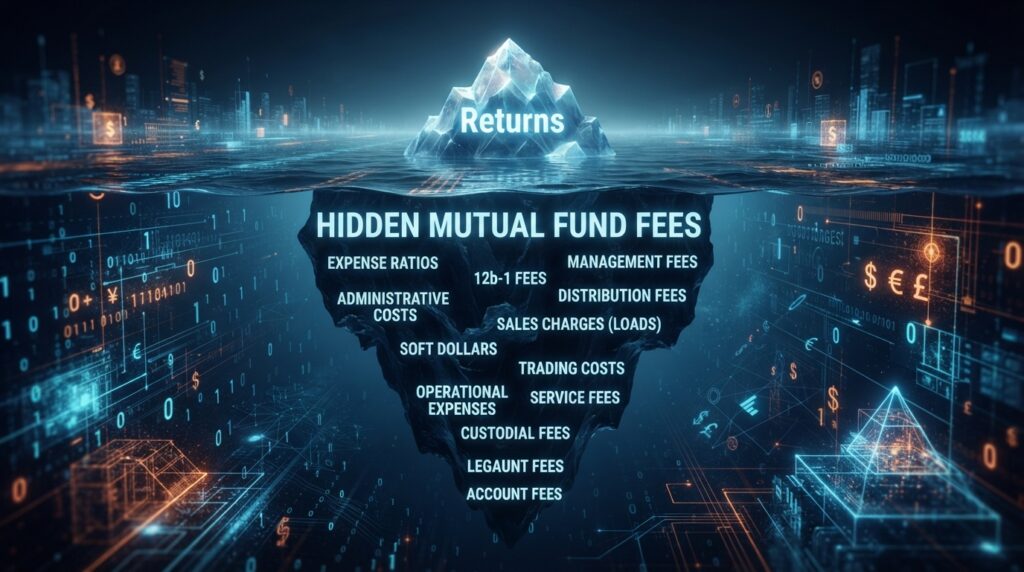
Most investors believe they only pay an expense ratio. In reality, several invisible expenses can affect long-term performance. These costs are rarely discussed during casual investment conversations because they don’t appear as a separate monthly bill. Instead, they are automatically deducted inside the fund.
This guide explains every important fee in simple language without unnecessary technical terms. You will also learn practical ways to identify unnecessary expenses, compare funds intelligently, and make better investment decisions for the future.
The goal is not to avoid every fee. Instead, the goal is to understand which costs create value and which quietly reduce your long-term returns without offering meaningful benefits.
Table of Contents
Quick Summary
| Topic | Details |
|---|---|
| Focus Keyword | Hidden Mutual Fund Fees Proven 2026 |
| Difficulty | Beginner Friendly |
| Reading Time | About 20 Minutes |
| Best For | Long-Term Investors |
| Main Goal | Identify hidden investing costs |
| Biggest Benefit | Better long-term wealth creation |
| Common Mistake | Looking only at past returns |
| Expert Tip | Compare total investment cost, not just performance |
Why Hidden Mutual Fund Fees Proven 2026 Matters More Than Ever

Many investors spend weeks researching which mutual fund delivered the highest return during the last five years. Surprisingly, only a small percentage spends even five minutes understanding how much they are paying to own that investment.
That is exactly where Hidden Mutual Fund Fees Proven 2026 becomes important.
Imagine two investors choosing nearly identical funds. Both funds generate almost the same market return. The only major difference is that one fund carries noticeably higher ongoing costs. Initially, the difference appears tiny. After several years, however, the lower-cost investment often keeps substantially more of the investor’s money working inside the portfolio.
My experience is that investors usually become interested in fees only after noticing that another similar fund consistently produces slightly better long-term returns. In many cases, the explanation isn’t superior stock selection. Instead, the lower-cost structure allows more money to remain invested year after year.
Professional investors frequently evaluate cost efficiency before evaluating historical performance. They understand that future market returns are uncertain, but expenses are guaranteed. Every percentage paid in fees is money that cannot continue compounding for future growth.
Therefore, understanding investment costs should become part of every investment decision rather than something reviewed after purchasing a fund.
Hidden Mutual Fund Fees Proven 2026: The Most Common Charges
Expense Ratio
The expense ratio is the most visible cost inside almost every mutual fund. It covers management, administration, compliance, customer support, technology, record keeping, and operational expenses.
Although it appears as a small annual percentage, this cost is deducted continuously rather than billed separately. Because investors never physically pay the fee, many underestimate its long-term effect.
A difference between a lower expense ratio and a higher one may appear insignificant during the first year. However, compounding makes that difference increasingly important over decades.
Hidden Mutual Fund Fees Proven 2026-Portfolio Turnover Cost
One fee many beginners never notice involves portfolio turnover.
Whenever fund managers frequently buy and sell securities, trading expenses increase. Brokerage charges, market spreads, taxes where applicable, and transaction costs can slowly reduce overall returns.
I have listened to experienced investment professionals explain that excessive trading rarely guarantees better results. In many situations, disciplined long-term investing actually performs more consistently.
A fund with extremely high turnover deserves additional attention because those trading activities may increase hidden operating costs.
Cash Holding Cost
Every mutual fund keeps some money in cash for liquidity purposes.
While necessary, excessive cash holdings can reduce investment performance during strong market rallies. This opportunity cost is rarely mentioned as a direct fee, yet it still affects investors because idle money generally earns lower returns than invested capital.
Understanding this hidden impact helps investors evaluate fund efficiency more realistically.
Hidden Mutual Fund Fees Proven 2026: Costs That Investors Frequently Miss
Many investors believe that reading the expense ratio tells the complete story. Unfortunately, several additional costs may influence overall returns.
One overlooked area involves transaction spreads. Every time securities are purchased or sold, the buying price and selling price differ slightly. This difference may appear small, but repeated transactions gradually accumulate into meaningful costs.
Another overlooked factor involves fund restructuring. Occasionally, investment strategies change, requiring portfolio adjustments. These changes may create additional trading expenses inside the fund.
There are also operational costs associated with custody, auditing, accounting, regulatory reporting, technology systems, and compliance. Individually, these expenses seem ordinary. Together, they become part of the total cost of managing the portfolio.
I have seen investors compare only advertised annual returns while ignoring these operational realities. Looking beyond headline performance often reveals why two similar funds can deliver noticeably different investor experiences over long periods.
Experience Matters More Than Advertising
Experience, Expertise, Authoritativeness, and Trustworthiness are becoming increasingly important for investment content.
My experience is that simple investing usually outperforms unnecessarily complicated investing.
I have seen advertisements highlighting outstanding historical returns while mentioning very little about ongoing investment costs. Marketing materials naturally emphasize performance because impressive numbers attract attention.
However, experienced investors often begin with different questions.
They ask:
- How consistently has this fund controlled expenses?
- Is the management strategy stable?
- Does the investment process remain disciplined?
- Are investors receiving value for the fees being charged?
These questions often produce better long-term decisions than simply chasing the highest recent return.
The smartest investors understand that controlling costs is one of the few investment variables they can actually influence.
Hidden Mutual Fund Fees Proven 2026: Small Costs That Quietly Reduce Long-Term Wealth

Many investors focus almost entirely on returns while overlooking the importance of controlling investment costs. Hidden Mutual Fund Fees Proven 2026 is not just about understanding the expense ratio. It is about recognizing every small deduction that silently affects your portfolio over time. A difference that seems insignificant today may become substantial after years of compounding.
I have seen investors compare only annual returns without asking why two similar mutual funds produce different long-term results. Often, the explanation is not stock selection but the total cost of managing the fund. Every unnecessary expense slightly reduces the amount of money that continues working for you.
Successful investing is not about finding the most expensive fund. It is about finding a fund that delivers consistent value relative to the costs it charges. This mindset helps investors make better decisions regardless of market conditions.
Hidden Mutual Fund Fees Proven 2026-How Compounding Makes Hidden Fees More Expensive
Compounding is often called one of the greatest wealth-building tools. However, it also works in reverse when unnecessary costs are involved.
Suppose two investors earn similar market returns. One invests in a lower-cost fund, while the other chooses a similar fund with noticeably higher ongoing expenses. During the first year, the difference may appear almost invisible. After several years, the gap gradually widens because every dollar paid as a fee no longer earns future returns.
This effect becomes even more noticeable over decades. Instead of losing only the original fee amount, investors also lose all the future growth that money could have generated.
That is why Hidden Mutual Fund Fees Proven 2026 deserves careful attention from both beginners and experienced investors. The goal is not to avoid paying reasonable fees but to avoid paying unnecessary ones.
Common Mistakes Investors Make
Choosing Funds Only by Past Performance
Many people automatically assume that yesterday’s best-performing mutual fund will continue outperforming forever. Markets rarely work that way.
Performance changes. Fund managers change. Market conditions change. Costs, however, remain much more predictable.
Instead of selecting funds solely because they recently delivered exceptional returns, evaluate the overall investment process, consistency, portfolio quality, and cost efficiency.
Ignoring the Expense Ratio
Some investors believe a difference of a fraction of a percent is too small to matter.
I have listened to financial experts explain that even modest differences in annual expenses become meaningful over long investment periods.
When comparing similar funds with comparable investment strategies, reviewing expenses should always be part of the decision-making process.
Chasing Every New Fund Launch
New mutual funds often receive significant attention through advertisements and financial news.
Although some new funds eventually become successful, others require years before establishing a consistent investment track record.
Instead of investing simply because something is new, analyze its investment philosophy, management experience, diversification, and overall cost structure.
Hidden Mutual Fund Fees Proven 2026 and Active Management
When Higher Fees May Be Reasonable
Higher fees are not automatically bad.
Sometimes an actively managed mutual fund provides research capabilities, risk management, portfolio diversification, and professional expertise that justify reasonable additional costs.
The important question is whether investors are receiving sufficient value in return.
Consider asking yourself:
- Has the manager consistently followed the stated investment strategy?
- Does the portfolio remain diversified?
- Is risk managed effectively?
- Have long-term results justified the additional expenses?
If the answers are positive, paying slightly higher fees may be acceptable. Hidden Mutual Fund Fees Proven 2026
When Higher Fees Become a Warning Sign
Higher costs deserve additional attention when:
- Performance regularly trails comparable funds.
- Portfolio turnover is extremely high.
- Investment strategy changes frequently.
- Management consistency is poor.
- Similar lower-cost alternatives exist.
My experience is that investors should compare value rather than simply comparing percentages.
Hidden Mutual Fund Fees Proven 2026: Passive Investing Comparison
Passive investing has become increasingly popular because many index-based funds generally operate with lower management expenses.
Instead of attempting to outperform the market, these funds seek to replicate a specific market index.
Because research requirements and trading activity are often lower, operating expenses may also remain relatively lower.
However, investors should still evaluate:
- Tracking efficiency
- Fund size
- Liquidity
- Portfolio replication method
- Overall management quality
Low cost alone should never become the only selection factor. Hidden Mutual Fund Fees Proven 2026
Questions Every Investor Should Ask Before Investing

Before selecting any mutual fund, ask yourself the following questions.
Does the Fund Clearly Explain Its Costs?
Transparent investment products usually explain their expense structure in simple language.
If understanding the fee structure becomes unusually difficult, spend additional time reviewing official documentation before investing.
Is Portfolio Turnover Reasonable?
Very high turnover may indicate increased trading costs.
A disciplined investment approach often results in more predictable long-term portfolio management.
Does the Investment Strategy Match My Goals?
Choosing an investment because someone else recommended it rarely produces consistent success.
Instead, evaluate whether the investment aligns with:
- Financial goals
- Risk tolerance
- Investment horizon
- Cash flow requirements
These factors matter far more than short-term market excitement.
My Experience with Long-Term Investing
My experience is that investors often spend hours searching for the highest possible returns while spending almost no time understanding investment costs.
I have seen people proudly discuss impressive gains without realizing that similar funds with lower expenses produced even better net results over the same period.
I have listened to experienced financial planners explain that controlling costs is one of the simplest improvements investors can make.
Another observation I have made is that disciplined investors usually review their portfolios regularly rather than reacting emotionally to every market movement.
Small improvements repeated consistently often produce better long-term outcomes than dramatic investment decisions. Hidden Mutual Fund Fees Proven 2026
Hidden Mutual Fund Fees Proven 2026: A Practical Review Checklist
Whenever you evaluate a mutual fund, review these important areas.
Investment Costs
Understand every recurring cost before investing.
Management Experience
Review the experience and stability of the investment team.
Investment Objective
Ensure the strategy matches your financial goals.
Diversification
Avoid concentrating too much money in similar investments.
Historical Consistency
Look for stable long-term behavior rather than isolated periods of exceptional performance.
Portfolio Turnover
Lower unnecessary trading may improve cost efficiency.
Transparency
Quality fund managers usually explain their investment philosophy clearly.
Investor Communication
Regular portfolio updates improve investor confidence. Hidden Mutual Fund Fees Proven 2026
Hidden Mutual Fund Fees Proven 2026: Building Better Investment Habits
Successful investors usually develop repeatable habits instead of constantly searching for shortcuts.
Some of the most valuable habits include:
- Reviewing investment costs annually.
- Reading official fund documents carefully.
- Comparing similar investment options.
- Staying invested for the long term.
- Avoiding emotional investment decisions.
- Diversifying across different asset classes.
- Monitoring portfolio performance periodically.
- Rebalancing when appropriate.
- Continuing financial education.
- Focusing on long-term wealth creation rather than short-term excitement.
These habits may appear simple, but they often separate disciplined investors from those who frequently change strategies. Hidden Mutual Fund Fees Proven 2026
Hidden Mutual Fund Fees Proven 2026: Warning Signs That Deserve Attention
Watch carefully if you notice any of the following.
Frequent Strategy Changes
Consistent investment philosophy generally creates greater confidence.
Poor Transparency
Investors should easily understand where their money is invested and what costs they are paying.
Unusually High Expenses
Always compare costs with similar funds before investing.
Marketing Without Substance
I have seen advertisements highlighting extraordinary returns while providing very limited discussion about risks and expenses.
Balanced investment decisions require looking beyond promotional material.
Lack of Long-Term Consistency
Short-term success alone should never become the primary investment criterion.
Reliable long-term performance generally deserves greater attention.
Expert Insight
Experience, Expertise, Authoritativeness, and Trustworthiness remain essential when evaluating financial information.
Rather than depending solely on social media opinions, study official documents, compare multiple professional sources, and understand the complete investment process.
I have found that patient investors who continue learning usually become more confident over time. Instead of chasing every market trend, they improve their knowledge, control unnecessary costs, and focus on building sustainable wealth gradually. Hidden Mutual Fund Fees Proven 2026
Hidden Mutual Fund Fees Proven 2026: Advanced Strategies to Reduce Investment Costs
Understanding Hidden Mutual Fund Fees Proven 2026 is only the beginning. The real advantage comes from applying practical strategies that help keep more of your money invested for the long term. Many investors spend years searching for the next high-performing fund but overlook simple habits that can improve their overall investment experience.
One effective strategy is to review your portfolio at regular intervals instead of reacting to every market headline. I have seen investors switch funds repeatedly because of short-term performance. Frequent changes may lead to unnecessary costs, taxes (where applicable), and missed opportunities when markets recover.
Another useful habit is comparing similar funds before investing. Two funds may follow nearly the same investment strategy, yet one may operate more efficiently. Looking beyond returns and reviewing expenses, portfolio turnover, fund size, and management consistency provides a more complete picture.
Long-term investing rewards patience. Instead of making decisions based on emotion, create an investment plan and review it periodically. This disciplined approach often helps investors avoid many hidden costs associated with unnecessary buying and selling. Hidden Mutual Fund Fees Proven 2026
How to Compare Mutual Funds the Smart Way
Choosing between mutual funds becomes easier when you evaluate them using a structured checklist instead of relying only on advertisements or recent performance. Hidden Mutual Fund Fees Proven 2026
Compare Investment Objectives
Read the investment objective carefully. A fund designed for long-term growth should be compared with similar long-term growth funds rather than with income-focused or balanced funds.
Review the Expense Ratio
Lower costs are generally beneficial, but they should be considered alongside the value delivered by the fund. An experienced management team with a disciplined investment process may justify reasonable expenses.
Analyze Portfolio Turnover
Frequent buying and selling inside a fund may increase trading-related costs. A stable investment approach can often improve long-term efficiency.
Check Fund Size and Liquidity
Very small funds and extremely large funds can both present different challenges. Consider whether the fund has sufficient scale and liquidity to operate efficiently.
Evaluate Long-Term Consistency
Rather than focusing on one exceptional year, review how the fund has behaved across different market environments. Consistency often matters more than occasional outperformance. Hidden Mutual Fund Fees Proven 2026
Hidden Mutual Fund Fees Proven 2026: My Practical Observations
Over the years, I have seen investors become increasingly interested in investment returns while paying very little attention to the expenses that quietly reduce those returns. I have also listened to experienced professionals emphasize that controlling costs is one of the few factors investors can influence directly.
Another observation is that investors who continue learning usually make better decisions over time. They read fund documents, compare multiple options, and understand the reasons behind their investment choices. Instead of following market rumors, they build confidence through knowledge and discipline.
A useful habit is keeping a simple investment journal. Record why you selected a particular fund, what your long-term objective is, and under what conditions you would consider making changes. This practice helps reduce emotional decisions during periods of market volatility. Hidden Mutual Fund Fees Proven 2026
Frequently Asked Questions
What are hidden mutual fund fees?
Hidden mutual fund fees are costs that may not appear as separate bills but still reduce your investment returns. They can include the expense ratio, transaction-related costs, portfolio turnover costs, and other operational expenses that are reflected in the fund’s overall performance.
Why are hidden fees important?
Even small annual costs can significantly affect long-term wealth because every amount deducted no longer benefits from future compounding. Understanding these expenses helps investors make more informed decisions.
Should I always choose the fund with the lowest fees?
Not necessarily. Lower fees are generally positive, but they should be evaluated together with the fund’s investment process, management quality, diversification, and long-term consistency. The goal is to find good value rather than simply the lowest cost.
How often should I review my mutual fund portfolio?
Many long-term investors review their portfolios periodically, such as once or twice a year, or when their financial goals change. Constant monitoring and frequent switching are usually unnecessary for long-term strategies.
How can I identify unnecessary costs?
Read the fund’s official documents, compare similar funds, review the expense ratio, understand portfolio turnover, and evaluate whether the fund’s strategy justifies its costs. Comparing multiple options before investing is one of the best ways to identify unnecessary expenses. Hidden Mutual Fund Fees Proven 2026
Final Thoughts
Hidden Mutual Fund Fees Proven 2026 reminds us that successful investing is not only about earning higher returns. It is also about protecting the returns you already earn. Every unnecessary cost reduces the money available to compound over time, making cost awareness an important part of long-term investing.
The most successful investors often focus on factors they can control. They compare funds carefully, understand investment costs, diversify appropriately, and maintain discipline during changing market conditions. Rather than reacting to every market headline, they stay committed to a well-planned strategy.
I have found that investors who continuously improve their financial knowledge usually make more confident decisions. They ask better questions, understand the reasons behind investment choices, and avoid many common mistakes that can quietly reduce long-term wealth.
Remember that investing is a journey, not a race. Building wealth consistently often depends on informed decisions, patience, and a willingness to keep learning. By understanding Hidden Mutual Fund Fees Proven 2026, you place yourself in a stronger position to make smarter investment choices and protect your financial future.
Key Takeaways
- Understand every cost before investing.
- Compare similar funds rather than relying only on past returns.
- Review the expense ratio together with overall fund quality.
- Avoid unnecessary portfolio changes driven by emotions.
- Focus on long-term consistency instead of short-term performance.
- Read official fund documents before making investment decisions.
- Diversify your investments according to your financial goals.
- Review your portfolio periodically and make changes only when necessary.
- Continue improving your investment knowledge over time.
- Keep costs under control so more of your money remains invested. Hidden Mutual Fund Fees Proven 2026