
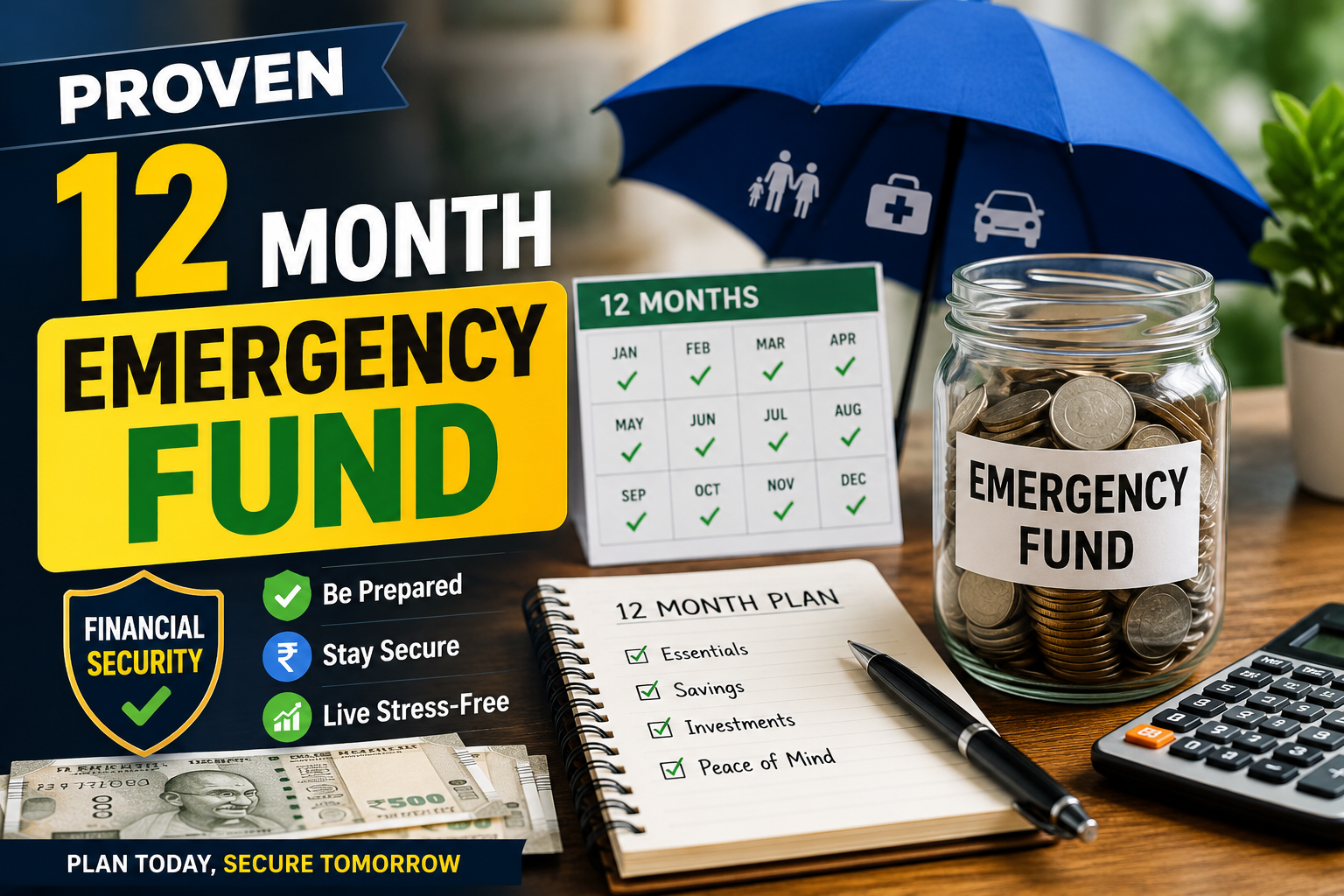
Proven 12 Month Emergency Fund-What would happen if your income suddenly stopped tomorrow? Many people assume everything will continue as normal until an unexpected event changes their financial situation overnight. A job loss, medical emergency, major home repair, business slowdown, or family responsibility can appear without warning. That is exactly why building a Proven 12 Month Emergency Fund is one of the smartest financial decisions anyone can make.
Unlike short-term savings, a Proven 12 Month Emergency Fund creates breathing room. Instead of making stressful financial decisions under pressure, you gain time to think clearly, explore better opportunities, and protect your long-term goals. I have seen people who were financially comfortable struggle because they had investments but very little accessible cash. I have also seen ordinary savers stay calm during difficult periods simply because they prepared well in advance.
This guide explains how to build a Proven 12 Month Emergency Fund using practical strategies that are easy to understand and realistic to follow. Whether your income is stable, irregular, or comes from multiple sources, these principles can help you build financial confidence that lasts.
Quick Summary
| Topic | Overview |
|---|---|
| Goal | Build a Proven 12 Month Emergency Fund |
| Best For | Employees, freelancers, business owners, families, retirees |
| Main Benefit | Financial stability during unexpected situations |
| Saving Method | Monthly automatic contributions |
| Ideal Storage | Safe, liquid, easily accessible accounts |
| Time Required | Depends on income and savings rate |
| Risk Level | Very Low |
| Long-Term Benefit | Greater financial confidence and flexibility |
Table of Contents
Why a Proven 12 Month Emergency Fund Matters More Than Ever
Financial uncertainty is not limited to recessions or global events. Personal emergencies happen every day. An unexpected medical expense, temporary income reduction, family responsibility, or urgent repair can create financial pressure regardless of how much someone earns. The difference between panic and confidence often comes down to preparation.
A Proven 12 Month Emergency Fund is designed to cover essential living expenses for approximately one year. This includes housing costs, utilities, groceries, insurance, transportation, healthcare, and other necessary bills. Instead of depending on credit cards or expensive loans, you rely on savings that you intentionally built over time.
One important lesson I have learned from studying successful financial habits is that wealth is not only about earning more money. It is also about having enough financial flexibility to handle unexpected events without disrupting your future plans. Many experienced financial planners emphasize that liquidity is just as important as investment growth because emergencies rarely wait for investment markets to recover.
People often underestimate how quickly expenses can accumulate during periods of reduced income. Even a few months without preparation can create lasting financial challenges. A Proven 12 Month Emergency Fund reduces that risk significantly by giving you options instead of forcing immediate decisions.
Understanding What Counts as a Real Emergency
Before you start saving, it is important to define what your emergency fund is actually for. Many people accidentally spend emergency savings on non-essential purchases because they never established clear rules.
A Proven 12 Month Emergency Fund should only be used for genuine financial emergencies that affect your ability to maintain essential living expenses. Examples include unexpected unemployment, urgent medical treatment, major home repairs that affect safety, essential vehicle repairs needed for work, or sudden family responsibilities that require immediate financial support.
Vacations, shopping festivals, luxury gadgets, entertainment subscriptions, and impulse purchases do not qualify as emergencies. Separating wants from genuine needs is one of the biggest habits that strengthens long-term financial stability.
I have seen people who labeled every unexpected expense as an emergency. As a result, their emergency savings disappeared repeatedly, leaving them unprepared when a real crisis arrived. Creating simple withdrawal rules can prevent this common mistake and keep your Proven 12 Month Emergency Fund available when you truly need it.
How Much Should Your Proven 12 Month Emergency Fund Be?

There is no universal amount because every household has different expenses. Instead of focusing on income, calculate your essential monthly spending. This usually includes housing, food, transportation, healthcare, insurance, utilities, education, and minimum debt payments if applicable.
For example, if your essential monthly expenses total $3,000, a complete Proven 12 Month Emergency Fund would equal approximately $36,000. Someone with $5,000 in monthly essential expenses would aim for around $60,000.
Notice that the calculation is based on necessary expenses rather than lifestyle spending. This distinction keeps your target realistic while ensuring your basic needs remain protected during difficult periods.
If saving an entire year’s expenses feels overwhelming, begin with one month, then expand gradually to three months, six months, and eventually twelve months. Every milestone improves your financial resilience.
Progress matters more than perfection. A steadily growing emergency fund is always more valuable than waiting for the perfect time to start.
The Psychology Behind Building Long-Term Savings
Saving money is rarely a mathematical challenge. More often, it is a behavioral challenge. Most people already understand that saving is important, yet many postpone it because immediate spending feels more rewarding than preparing for an uncertain future.
A Proven 12 Month Emergency Fund works because it changes your mindset. Instead of viewing savings as money you cannot spend, you begin seeing it as protection for your future self.
Behavioral research consistently shows that automatic habits outperform motivation alone. That is why many successful savers automate transfers immediately after receiving income rather than waiting until the end of the month.
My experience is that people who treat emergency savings like a mandatory monthly bill tend to reach their goals much faster. They remove emotional decision-making from the process. Over time, consistent saving becomes part of their normal financial routine rather than a difficult sacrifice.
Another helpful strategy is celebrating milestones. Completing your first month of expenses, reaching three months, or crossing the halfway point creates positive momentum. These milestones remind you that financial security is built through consistency rather than speed.
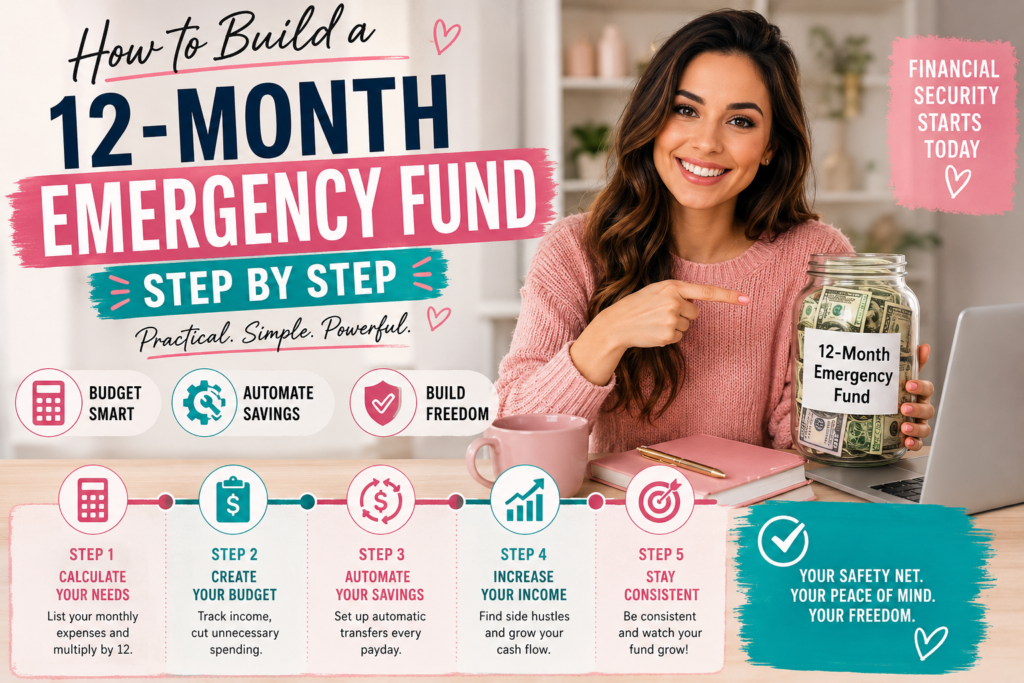
Step 1: Calculate Your Essential Monthly Expenses

The foundation of every Proven 12 Month Emergency Fund is knowing exactly how much money you truly need each month.
Start by reviewing recent bank statements, payment records, and recurring expenses. Separate essential costs from discretionary spending. Ask yourself one simple question for every expense: “Would I still pay for this if my income stopped tomorrow?”
Your essential list may include:
- Housing payments
- Utilities
- Groceries
- Healthcare
- Insurance
- Transportation
- Basic communication services
- Essential education expenses
- Minimum debt obligations
Everything else should be evaluated carefully before including it.
Many people discover that their essential expenses are lower than expected after removing optional subscriptions, luxury purchases, and irregular spending. This makes the target for a Proven 12 Month Emergency Fund more achievable while providing a realistic picture of financial security.
Accurate calculations today prevent surprises tomorrow. Spending a little extra time reviewing your finances now creates a stronger plan for the months and years ahead.
Step 2: Set a Realistic Savings Target and Timeline
After calculating your essential monthly expenses, the next step is turning your Proven 12 Month Emergency Fund into a practical goal. Looking at the full amount can feel overwhelming, but breaking it into smaller milestones makes the journey much easier. Instead of focusing on saving an entire year’s expenses immediately, divide your target into monthly, quarterly, and annual checkpoints.
For example, if your goal is $24,000, saving $2,000 every month will help you reach it within a year. If that amount is too high, adjust your timeline. Saving consistently for 18 or 24 months is far better than giving up because your first goal felt impossible. Financial progress is built through steady action, not unrealistic expectations.
I have seen people become discouraged because they compared themselves with others. Every financial journey is different. Someone with a higher income may save faster, while another person may need more time. Both are moving toward the same destination. The important part is maintaining consistency.
Keep your target visible. Write it in a notebook, use a budgeting app, or place it on a vision board. Watching your Proven 12 Month Emergency Fund grow month after month creates motivation and reminds you why you started.
Step 3: Automate Every Contribution
One of the easiest ways to build a Proven 12 Month Emergency Fund is to remove emotion from the saving process. Automation does exactly that. Instead of deciding every month whether you should save, your money moves automatically before you have a chance to spend it.
Arrange an automatic transfer on the same day you receive your salary or business income. Even a modest amount transferred regularly can become substantial over time. Automation also helps during busy months when saving might otherwise be forgotten.
Many successful savers follow the principle of “pay yourself first.” This means your savings receive priority before entertainment, shopping, or optional expenses. Over time, your lifestyle naturally adjusts to the remaining income.
My experience is that automation eliminates many excuses. When money is transferred immediately, there is less temptation to spend it elsewhere. I have also listened to experienced financial coaches who recommend increasing automatic contributions whenever your income rises. If you receive a raise or earn extra income, directing part of it toward your Proven 12 Month Emergency Fund can help you reach your goal much sooner without feeling a significant change in your lifestyle.
Step 4: Choose the Right Place to Keep Your Emergency Fund
Where you keep your Proven 12 Month Emergency Fund is just as important as building it. The primary purpose of this money is accessibility and safety, not high investment returns.
Your emergency savings should remain separate from your everyday spending account. This creates a psychological barrier that discourages unnecessary withdrawals while keeping the funds available when a genuine emergency occurs.
Look for an account that offers easy access, strong security, and reasonable interest without exposing your savings to significant market fluctuations. Avoid placing emergency money into assets that may lose value just when you need cash most.
Some people make the mistake of investing their emergency fund entirely in volatile assets because they hope for higher returns. While long-term investing is important, emergency savings serve a different purpose. Their job is stability rather than aggressive growth.
I have seen situations where market declines happened at the same time people needed cash urgently. Those with dedicated emergency savings avoided selling investments at unfavorable prices. Their Proven 12 Month Emergency Fund protected both their finances and their long-term investment strategy.
A useful habit is reviewing your emergency account every few months. Confirm that it remains accessible, secure, and aligned with your financial needs as your expenses change over time.
Step 5: Build Your Emergency Fund Faster Without Feeling Restricted
Many people believe that building a Proven 12 Month Emergency Fund requires giving up everything they enjoy. In reality, small adjustments often create meaningful progress without making life feel uncomfortable.
Begin by reviewing your recurring expenses. Cancel subscriptions you rarely use, negotiate lower utility or service bills, and compare insurance plans when appropriate. Small monthly savings may appear insignificant at first, but over a year they can contribute hundreds or even thousands toward your emergency fund.
Another effective strategy is directing unexpected income into savings. Bonuses, tax refunds, freelance projects, gifts, or proceeds from selling unused items can accelerate your progress without affecting your regular monthly budget.
I have found that many households overlook the value of reducing waste. Buying groceries with a list, planning meals in advance, and avoiding impulse purchases can free up money every month. These habits not only support your Proven 12 Month Emergency Fund but also improve your overall financial discipline.
Remember that increasing income can be just as powerful as reducing expenses. Developing new skills, taking on occasional freelance work, or creating a small side business can provide additional funds dedicated entirely to your emergency savings.
Common Mistakes That Slow Down a Proven 12 Month Emergency Fund
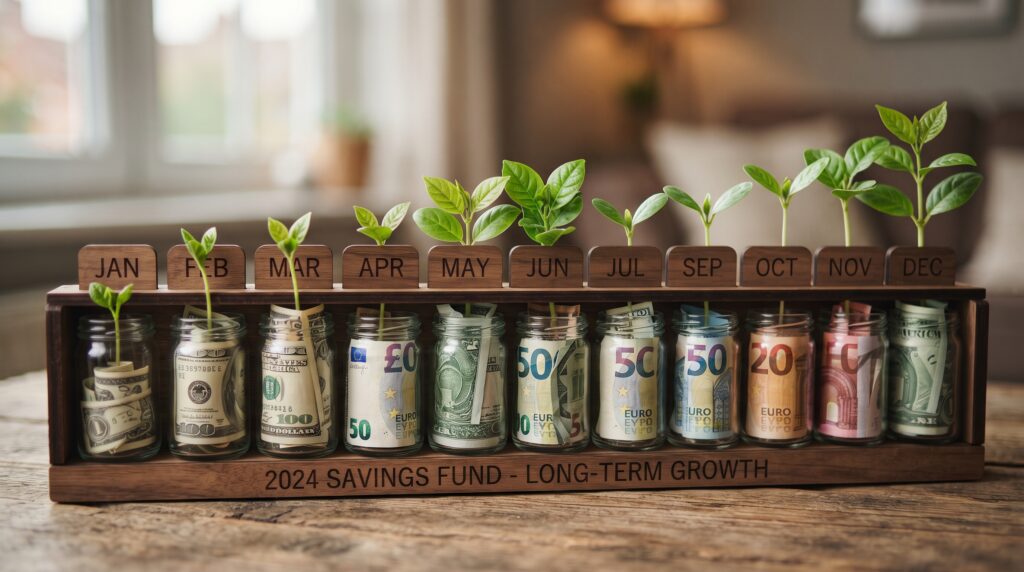
Building a Proven 12 Month Emergency Fund is straightforward, but certain mistakes can delay progress or reduce its effectiveness. Recognizing these pitfalls early can save both time and money.
One common mistake is setting unrealistic goals. Saving too aggressively may leave you feeling deprived, making it harder to stay consistent. A sustainable plan is usually more successful than an ambitious one that cannot be maintained.
Another mistake is mixing emergency savings with everyday spending. When both types of money remain in the same account, it becomes easier to justify unnecessary purchases. Keeping your emergency fund separate encourages discipline.
Some people also stop saving after reaching a small milestone, such as one or two months of expenses. While this is excellent progress, the purpose of a Proven 12 Month Emergency Fund is to provide longer-term security during extended financial disruptions.
Ignoring inflation is another issue. As living costs increase, your emergency fund should be reviewed periodically and adjusted when necessary. Updating your target once or twice a year helps ensure that your savings continue to provide the intended level of protection.
Finally, avoid using emergency savings for planned expenses. Annual insurance premiums, holiday shopping, vacations, or home renovations should have their own dedicated savings goals. Protecting your emergency fund for true emergencies preserves its value and purpose.
A Practical Example of Building Financial Confidence
Imagine two professionals with similar incomes and monthly expenses. Both earn enough to cover their lifestyle comfortably. The difference is that one has spent several years gradually building a Proven 12 Month Emergency Fund, while the other has focused only on spending and investing without maintaining accessible savings.
When an unexpected career interruption occurs, the first person continues paying essential bills without panic. They have time to evaluate new opportunities, improve their skills, and make thoughtful decisions. The second person may need to rely on expensive debt, sell long-term investments, or accept the first available opportunity regardless of whether it aligns with their career goals.
I have listened to financial experts describe this difference as the “freedom gap.” Emergency savings create freedom—not because they generate excitement, but because they reduce pressure when important decisions must be made. That sense of stability often leads to better financial outcomes over the long term.
This example illustrates why a Proven 12 Month Emergency Fund is not simply another savings goal. It is a foundation that supports every other aspect of your financial plan, from investing and retirement planning to career growth and personal confidence.
Advanced Strategies for a Proven 12 Month Emergency Fund
Once you have built the habit of saving, the next step is making your Proven 12 Month Emergency Fund more efficient and resilient. Many people stop after reaching a basic target, but experienced savers regularly refine their strategy to keep their financial safety net strong.
A useful approach is creating tiered emergency savings. Instead of keeping the entire amount in one place, divide it into layers based on how quickly you may need the money. Keep one to two months of expenses in a highly accessible account for immediate emergencies. The remaining portion can stay in a safe, liquid account that still allows relatively quick access.
This structure helps balance convenience and discipline. Immediate cash remains available, while the larger portion is slightly separated from everyday spending. I have seen that people are less likely to dip into their emergency fund unnecessarily when it is organized intentionally.
Another advanced strategy is reviewing your fund every six months. Income, family responsibilities, housing costs, and healthcare expenses can change over time. Updating your target ensures that your Proven 12 Month Emergency Fund continues to reflect your current reality rather than outdated numbers.
How Freelancers and Business Owners Should Approach a Proven 12 Month Emergency Fund
People with irregular income often need a different strategy. Freelancers, consultants, creators, commission-based workers, and business owners may experience income fluctuations even when their careers are successful.
For them, a Proven 12 Month Emergency Fund can be especially valuable because it helps smooth out unpredictable months. Instead of saving a fixed amount every month, consider saving a percentage of every payment. For example, directing 10%–30% of each payment into emergency savings can create consistent progress regardless of income variability.
During strong income months, increase contributions aggressively. During slower periods, maintain the habit with smaller contributions rather than stopping completely. This flexible approach often works better than rigid monthly targets.
My experience is that many self-employed professionals underestimate how useful cash reserves become during temporary business slowdowns. A strong emergency fund can provide the confidence to decline poor opportunities and focus on building better long-term work.
The 3-6-9-12 Method for Building a Proven 12 Month Emergency Fund
If a full year of expenses feels intimidating, use a milestone-based approach:
Stage 1
3 Months of Expenses
Focus on immediate financial stability and basic emergency protection.
Stage 2
6 Months of Expenses
Gain stronger protection against job loss or major disruptions.
Stage 3
9 Months of Expenses
Build significant financial flexibility and reduce stress.
Stage 4
12 Months of Expenses
Complete your Proven 12 Month Emergency Fund and achieve a high level of financial resilience.
Breaking the journey into stages creates momentum and makes a large goal feel achievable.
What to Do If You Need to Use Your Emergency Fund
Using your emergency fund is not a failure. It means the fund is serving its purpose.
When a genuine emergency occurs, focus first on solving the problem. After the situation stabilizes, create a rebuilding plan as soon as possible.
Start by restoring one month of expenses, then continue rebuilding gradually until your Proven 12 Month Emergency Fund is fully replenished. Many people find that rebuilding is easier than starting from zero because they already have the saving habit.
A helpful mindset is to treat emergency fund rebuilding as a temporary financial priority. Reduce optional spending for a few months and direct extra income toward restoration until your safety net is back in place.
How Inflation Affects a Proven 12 Month Emergency Fund
One topic that is often ignored is inflation. The amount that covered 12 months of expenses a few years ago may no longer be sufficient today.
Review your essential expenses at least once a year. If housing, food, transportation, or healthcare costs have increased significantly, update your emergency fund target accordingly.
For example, if your monthly essential expenses rise from $3,000 to $3,500, your Proven 12 Month Emergency Fund should increase from $36,000 to approximately $42,000.
Small annual adjustments are usually easier than making one large correction later.
The Emotional Benefits of a Proven 12 Month Emergency Fund
Financial discussions often focus only on numbers, but the emotional benefits are equally important.
People with a strong emergency fund frequently report:
- Less anxiety about unexpected expenses.
- Greater confidence when making career decisions.
- Better sleep during uncertain periods.
- Reduced dependence on debt.
- More patience with long-term investments.
- A stronger sense of financial control.
I have listened to many individuals say that their emergency fund changed how they think about money. Instead of feeling one paycheck away from stress, they began feeling prepared for uncertainty.
That psychological shift can be just as valuable as the money itself.
A Simple Monthly Action Plan
Here is a practical framework you can follow:
Week 1
Calculate or review your essential monthly expenses.
Week 2
Set up or increase automatic transfers.
Week 3
Identify one expense to reduce or eliminate.
Week 4
Track progress and celebrate the monthly milestone.
Repeating this cycle consistently can produce remarkable results over time.
The Bigger Picture
A Proven 12 Month Emergency Fund is not about predicting disasters. It is about preparing for uncertainty while giving yourself more options in life.
Whether you are building a career, running a business, supporting a family, or planning for long-term goals, financial flexibility becomes a powerful advantage. Emergencies may still happen, but they do not have to destroy your progress.
In my experience, the people who build lasting financial stability are rarely the ones making perfect predictions. They are the ones who prepare consistently, protect their downside, and give themselves enough time to recover when life becomes unpredictable.
That is exactly what a Proven 12 Month Emergency Fund is designed to do.
Final Takeaway
Start with one month. Build to three. Then six. Then twelve.
Progress is more important than perfection, and every contribution moves you closer to greater financial security.
FAQ
1. How much should I save in a 12-month emergency fund?
Save approximately 12 months of essential living expenses, including housing, food, utilities, transportation, healthcare, insurance, and minimum debt payments.
2. Where should I keep my emergency fund?
Keep it in a safe, liquid, easily accessible account that is separate from everyday spending.
3. Is a 12-month emergency fund too much?
For people with irregular income, dependents, or higher financial responsibilities, a 12-month fund can provide valuable stability and flexibility.
4. Should I invest my emergency fund?
Emergency funds prioritize safety and accessibility over high returns. Avoid placing the entire fund in volatile investments.
5. What if I need to use the money?
Use it for genuine emergencies, then create a plan to rebuild the fund gradually once the situation stabilizes.
Conclusion
Building a Proven 12 Month Emergency Fund is one of the most practical financial decisions you can make. It is not about expecting the worst—it is about being prepared for the unexpected. Whether you are an employee, freelancer, entrepreneur, or retiree, having enough savings to cover a full year of essential expenses gives you the confidence to face life’s uncertainties without relying on debt or disrupting your long-term financial goals.
The journey does not require a high income or perfect timing. It starts with understanding your essential expenses, setting a realistic savings target, automating regular contributions, and staying consistent. Small, disciplined actions repeated over time can create a strong financial foundation. I have seen that people who prioritize emergency savings often make better financial decisions because they are not forced to act under pressure. They have the freedom to think clearly, plan wisely, and focus on opportunities instead of worrying about unexpected setbacks.
Remember that your Proven 12 Month Emergency Fund is not a one-time goal. Review it regularly, adjust it as your lifestyle and expenses change, and rebuild it promptly if you ever need to use it. Treat it as the foundation of your financial plan, supporting everything from investing and retirement planning to career growth and personal confidence.
Start today, even if your first contribution is small. Every amount you save brings you one step closer to greater financial security, peace of mind, and long-term stability. Your future self will thank you for the preparation you begin today.
1 thought on “Proven 12 Month Emergency Fund”