
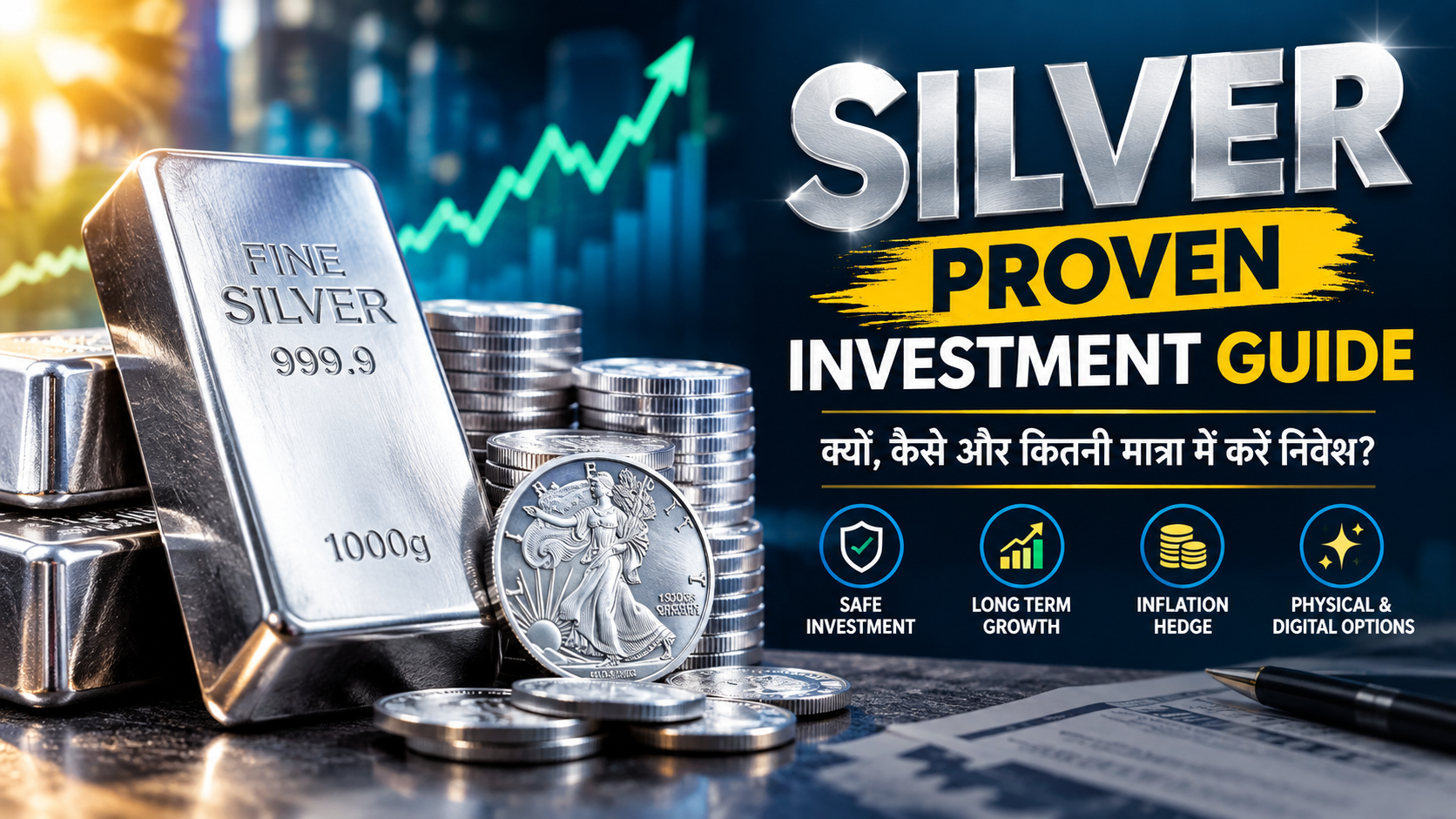
Silver 2026 Proven Investment Guide Silver 2026 is a topic that looks simple at first, but the real story is much deeper. Silver is not only a precious metal. It is also an important industrial material, which means its demand can come from both investors and businesses. That makes silver different from many other assets and also makes its price behaviour difficult to predict.
When people search for Silver 2026, they often want one simple answer: will silver go up? But a better approach is to understand what can actually move the market. Supply, industrial demand, investment demand, recycling, technology, interest rates, inflation expectations and investor sentiment can all influence silver prices.
This guide takes a practical approach. Instead of giving a dramatic price prediction, it explains the silver market in simple language and shows how to think about silver as an investment. Silver 2026 Proven Investment Guide
Table of Contents
Silver 2026 Proven Investment Guide-Silver 2026: Understanding the Real Story
Silver has two important roles in the global economy. The first is its role as a precious metal. The second is its role as an industrial material.
This combination is what makes silver interesting.
People buy silver for investment, jewellery and other forms of ownership. At the same time, industries use silver because it has useful physical properties, especially excellent electrical conductivity.
Therefore, silver demand does not depend on only one group of buyers.
This can create an interesting situation. If investment demand increases while industrial demand remains strong, the market can become tighter. However, the opposite can also happen. If economic activity weakens and investors lose interest, silver can face pressure from multiple directions.
That is why Silver 2026 should not be analysed from price charts alone.
A price chart tells you what happened. It does not always tell you why it happened or whether the same conditions will continue. Silver 2026 Proven Investment Guide
Why Silver 2026 Is Getting So Much Attention
The silver market receives attention because several different forces are working at the same time.
Industrial demand is one major factor. Silver is used in electronics, electrical applications, solar technology, automobiles and other products.
Investment demand is another factor. Investors can gain silver exposure through physical metal and different financial products.
Then there is supply.
Mining silver is not something that can be increased overnight. New mining projects can require substantial time and capital. In addition, a significant portion of silver production comes as a by-product of mining other metals.
This creates an important difference between silver and some other commodities.
Even when silver prices increase, miners cannot simply turn a switch and immediately produce a huge additional supply.
Recycling can provide another source of metal. When prices become attractive, more silver can potentially return to the market through recycling.
The result is a market where supply and demand need to be studied together. Silver 2026 Proven Investment Guide
Silver 2026 and Industrial Demand
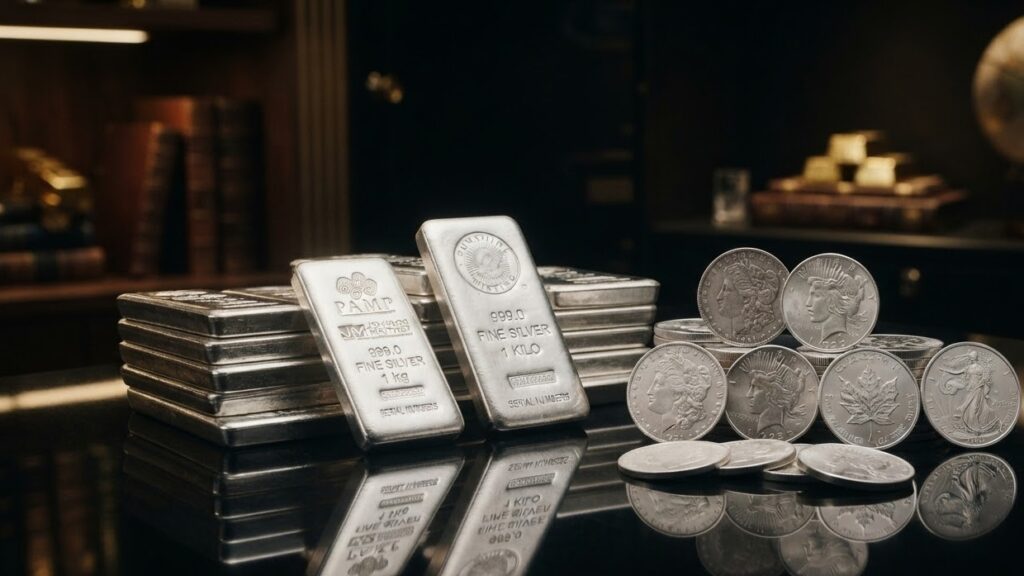
Industrial demand is one of the most important parts of the Silver 2026 story.
Silver is widely used because of its electrical and physical properties. This makes it useful in products and technologies that require efficient electrical connections or conductivity.
Solar technology is frequently discussed when investors analyse future silver demand.
The reason is straightforward. Silver is used in photovoltaic applications, and continued growth in solar installations can create additional demand.
But there is an important detail that many simple silver stories ignore.
A growing industry does not automatically mean that silver consumption will grow at exactly the same rate.
Manufacturers have a strong reason to reduce costs. They can work on using less silver per unit, improve production efficiency or investigate alternative materials.
This process is sometimes described as thrifting or substitution.
Therefore, when studying Silver 2026, it is useful to look at two things together: how quickly an industry is growing and how much silver each product actually requires.
That gives a more realistic picture of future demand. Silver 2026 Proven Investment Guide
Silver Supply Matters Just as Much
Demand is only half of the equation.
Supply matters just as much.
The Silver Institute’s 2026 outlook projected global silver supply to increase while also forecasting another annual market deficit. It projected mine production to rise and recycling to remain an important source of supply.
This is an important point because the word “deficit” can easily be misunderstood.
A market deficit does not mean that silver suddenly disappears from the world.
Existing inventories can help satisfy demand. Recycling can also bring previously used silver back into the market.
Therefore, investors should look beyond a single deficit number.
A better analysis asks several questions.
How much silver is being mined?
How much is being recycled?
How much industrial demand exists?
How much investment demand exists?
What is happening with inventories?
And how quickly are these numbers changing?
These questions provide more useful information than simply saying that silver is “in shortage.” Silver 2026 Proven Investment Guide
What Can Push Silver Prices Higher?

Several factors can support silver prices.
Stronger investment demand can increase buying pressure.
Higher industrial demand can create additional demand for the physical metal.
Limited mine growth can restrict new supply.
Higher recycling may help supply, but recycling does not necessarily respond immediately to every change in price.
Macroeconomic conditions can also influence investor behaviour.
Interest rates, inflation expectations, currency movements and economic growth can all affect precious metals.
However, these factors do not always move in the same direction.
For example, stronger economic activity could increase industrial demand, but higher interest rates could make non-yielding assets less attractive.
This is why Silver 2026 should be viewed as a combination of different forces rather than one simple bullish or bearish story. Silver 2026 Proven Investment Guide
What Can Push Silver Prices Lower?
Silver can also fall sharply.
One possible reason is weaker industrial activity.
If manufacturing slows, some industrial demand for silver may decline.
Another factor is investor sentiment.
Silver can attract investors when the market is exciting. But if sentiment changes, some investors may sell quickly.
Interest rates can also matter.
When interest rates rise, investors may have more opportunities to earn returns from interest-bearing assets. This can influence demand for assets that do not themselves pay interest.
Currency movements can also affect internationally traded commodities.
Most importantly, investors should remember that a strong long-term story does not prevent short-term price declines.
An asset can have favourable long-term fundamentals and still experience significant temporary falls.
That is a normal part of market risk. Silver 2026 Proven Investment Guide
Silver 2026: Physical Silver or Financial Exposure?
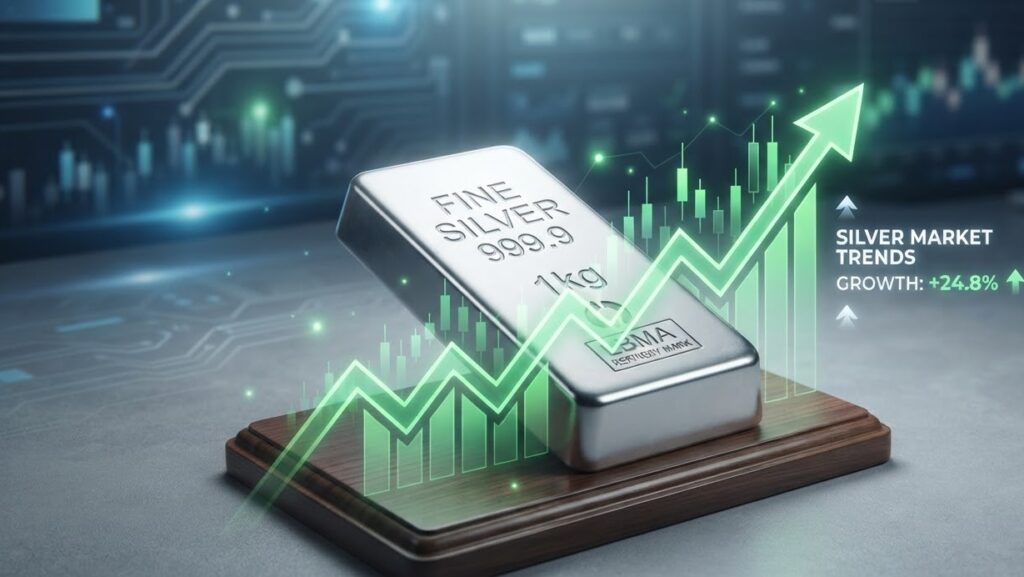
There are different ways to obtain silver exposure.
Physical silver includes products such as coins and bars.
The biggest attraction is direct ownership.
You actually own the metal.
But physical ownership also creates practical responsibilities.
You need to think about purchase premiums, storage, security, insurance and the price you may receive when selling.
The selling price may also differ from the market price of silver.
That difference can affect your actual return.
Financial products provide another approach.
Some products are designed to provide exposure to silver prices without requiring the investor to personally store physical metal.
This can be convenient.
However, the product structure matters.
Different products can have different fees, risks and methods of gaining silver exposure.
Therefore, investors should read the relevant product documents instead of assuming every silver investment product works in exactly the same way. Silver 2026 Proven Investment Guide
How to Think About Physical Silver
Physical silver is easy to understand at a basic level.
You pay for silver and receive physical metal.
But the real cost can be more complicated.
Suppose the underlying market price is one amount, but a dealer charges a premium above that price.
Your starting cost is already higher than the underlying silver value.
Then consider the selling spread.
If you later sell the silver for less than the price you paid, the market may need to rise significantly before you recover the complete purchase cost.
Storage is another consideration.
A small amount of silver may be easy to store.
A large physical holding creates a different problem.
Security becomes more important.
This is why physical silver should be evaluated based on total ownership cost rather than simply the quoted silver price. Silver 2026 Proven Investment Guide
Silver 2026 and Exchange-Traded Products
Exchange-traded products can provide a more convenient way to gain silver exposure.
The investor does not normally need to store silver personally.
Buying and selling can also be easier through a financial market.
However, convenience does not mean there is no risk.
Investors need to understand what the product actually owns and how it tracks silver.
Some products can have different structures, fees and tracking characteristics.
The price of the product can also move significantly when silver prices change.
Regulatory documents for silver-linked investment products warn that silver can experience substantial price fluctuations and that factors such as industrial demand, interest rates, inflation expectations, currencies and investor sentiment can affect its value.
The simple rule is this: understand the product before buying the product. Silver 2026 Proven Investment Guide
Silver 2026 Compared With Gold
Silver and gold are often placed in the same category because both are precious metals.
But they are not identical investments.
Gold has a stronger monetary and reserve-asset role.
Silver has a much larger industrial component.
This difference can influence how the two metals behave.
Silver can sometimes move more aggressively than gold.
That can create larger gains during strong periods, but it can also create larger losses during weak periods.
The gold-to-silver ratio is sometimes used by investors to compare the relative prices of the two metals.
It can provide useful historical context.
However, it should not be treated as a guaranteed signal that silver is cheap or expensive.
Markets can remain outside historical ranges for long periods.
Therefore, the ratio is better used as one research tool rather than a complete investment strategy. Silver 2026 Proven Investment Guide
Seven Questions to Ask Before Buying Silver
Before considering Silver 2026 as an investment, ask yourself why you want exposure to silver.
Are you looking for diversification?
Are you interested in industrial demand?
Do you prefer physical ownership?
Are you simply reacting to a recent price increase?
Your reason matters.
Next, examine the total cost.
For physical silver, consider premiums, storage and selling spreads.
For financial products, examine fees and the product structure.
Then consider volatility.
Ask yourself how you would react if silver prices fell significantly after you bought.
This question is more important than many investors realise.
You should also study supply and demand.
Look at mine production, recycling, industrial consumption and investment demand.
Finally, consider what would make your investment thesis wrong.
This is one of the strongest habits an investor can develop.
Instead of asking only, “Why could silver rise?”
also ask, “What could make my analysis wrong?”
That question forces you to think beyond confirmation. Silver 2026 Proven Investment Guide
Common Silver Investment Mistakes
One common mistake is buying silver simply because its price has recently increased.
A rising market attracts attention.
People see the price moving and assume they are missing an opportunity.
That emotional pressure can lead to poor decisions.
Another mistake is believing that a supply deficit automatically guarantees higher prices.
It does not.
Prices are influenced by expectations, inventories, recycling, investment flows, industrial conditions and broader financial markets.
A third mistake is ignoring transaction costs.
A physical silver buyer may focus on the headline silver price while ignoring the premium paid to acquire the metal.
A fourth mistake is putting too much money into one commodity.
Silver can be part of a diversified portfolio, but it is still one asset.
Concentration creates additional risk.
The final mistake is confusing investing with trading.
A long-term investor and a short-term trader may look at the same silver chart but ask completely different questions.
Knowing which activity you are actually doing can prevent unnecessary mistakes. Silver 2026 Proven Investment Guide
Silver 2026: A Simple Research Framework
A simple research framework can make silver analysis easier.
Start with price.
Understand the current price and recent volatility.
Then study fundamentals.
Look at supply, mining, recycling and demand.
Next, study industrial applications.
Ask where silver is being used and whether those applications are growing.
After that, study the broader economy.
Interest rates, inflation expectations, currencies and economic growth can influence investor behaviour.
Finally, examine investment demand.
Look at whether investors are increasing or reducing their exposure to silver.
This five-step approach is much more useful than following a single social-media prediction.
The purpose is not to predict the exact silver price.
The purpose is to understand the forces that can influence the price. Silver 2026 Proven Investment Guide
The Solar Silver Question
Solar energy is one of the most discussed areas of silver demand.
The basic argument is easy to understand.
More solar installations can mean more demand for silver-containing components.
However, the industry is also working to improve efficiency.
If manufacturers can produce the same amount of energy while using less silver per unit, total silver demand may grow more slowly than solar capacity.
The Silver Institute’s 2026 outlook discusses both solar growth and efforts to reduce silver intensity through thrifting and substitution.
This creates an important lesson.
Never analyse commodity demand only by looking at the growth of the final industry.
Also examine how much of the commodity is required to produce each unit.
This principle can be applied to many commodities, not only silver. Silver 2026 Proven Investment Guide
Silver and Future Technology
Technology can influence Silver 2026 in more than one way.
Silver is used in electronics and electrical applications.
The growth of digital infrastructure, advanced electronics, vehicles and energy systems can potentially support industrial demand.
At the same time, technological improvement can reduce the amount of silver needed for individual products.
That creates a balance.
More products can increase demand.
Better efficiency can reduce material usage.
Investors should therefore watch both trends.
The Silver Institute has identified areas including electronics, data centres, artificial-intelligence-related technologies and automotive applications as areas relevant to future silver demand.
The important point is not that technology automatically makes silver prices rise.
The important point is that technology can change the structure of silver demand. Silver 2026 Proven Investment Guide
Silver 2026 and Risk Management
Risk management is more important than finding the perfect silver forecast.
There is no perfect forecast.
Unexpected events can change markets quickly.
Economic growth can change.
Interest rates can change.
Investor sentiment can change.
Industrial demand can change.
Technology can change.
Mining supply can also change.
This means every Silver 2026 investment thesis should include a downside scenario.
Ask what happens if silver prices fall sharply.
Ask whether you can continue holding the position without needing the money immediately.
Ask whether your original reason for buying silver would still be valid.
If the answer depends entirely on silver reaching a specific price, the investment thesis may be too fragile.
A stronger approach is to understand the underlying reason for owning the asset. Silver 2026 Proven Investment Guide
How Much Silver Should an Investor Own?
There is no universal percentage that works for every person.
The appropriate allocation depends on financial goals, risk tolerance, investment horizon, liquidity requirements and the rest of the portfolio.
Someone with substantial exposure to commodities has a different situation from someone with no commodity exposure.
This is why a simple rule such as “everyone should own this much silver” can be misleading.
The better question is how silver fits into the complete financial picture.
Diversification is about avoiding excessive dependence on one asset or one economic outcome.
Silver can be useful within a broader strategy, but it should be evaluated in relation to everything else an investor already owns. Silver 2026 Proven Investment Guide
Silver 2026: Think in Scenarios
Instead of making one prediction, create different scenarios.
In a strong scenario, industrial demand could remain healthy, investment demand could remain strong and supply growth could remain limited.
In a weaker scenario, industrial demand could slow while investment demand falls.
There can also be a middle scenario in which supply and demand both grow without creating an extreme imbalance.
This way of thinking is useful because the future rarely follows one clean path.
Scenario analysis also reduces emotional attachment to one prediction.
If the market moves differently from your expectation, you can return to your assumptions and examine what changed.
That is much more useful than simply saying that the market was “wrong.” Silver 2026 Proven Investment Guide
Silver 2026: What the Current Data Tells Us
The 2026 outlook from the Silver Institute projected another annual market deficit while also forecasting increases in mine production and recycling. It projected global supply at around 1.05 billion ounces and mine production at around 820 million ounces.
It also projected strong physical investment demand.
These figures are useful because they show the complexity of the market.
Silver supply is not completely fixed.
Mining and recycling can increase.
At the same time, demand can remain strong enough to keep the market in deficit.
The correct interpretation is not that a particular silver price is guaranteed.
The correct interpretation is that supply and demand remain important areas to monitor.
As new data arrives, investors should update their view rather than blindly following an old prediction. Silver 2026 Proven Investment Guide
What Beginners Should Avoid in Silver 2026
Beginners should be careful with extreme claims.
Statements such as “silver can only go up” are not useful investment analysis.
Neither are claims that a specific future price is guaranteed.
Markets contain uncertainty.
Even professional analysts can disagree because they use different assumptions about economic growth, supply, demand and investor behaviour.
Another warning sign is urgency.
If someone says you must buy immediately because this is your “last chance,” slow down.
Good investments do not require emotional pressure.
Take time to understand the asset, the product, the costs and the risks.
The goal should be informed decision-making, not excitement. Silver 2026 Proven Investment Guide
Silver 2026: The Bigger Picture
Silver is interesting because it sits between two worlds.
It is a precious metal, but it is also an industrial material.
Its demand can come from investors, manufacturers, technology companies and consumers.
Its supply comes from mining and recycling.
Its price can react to both commodity fundamentals and financial-market sentiment.
That combination makes Silver 2026 worth studying.
But it also means that simple predictions can be dangerous.
A good silver analysis should remain flexible.
Watch supply.
Watch industrial demand.
Watch investment demand.
Watch technology.
Watch interest rates and broader economic conditions.
Most importantly, keep checking whether the original investment thesis is still valid. Silver 2026 Proven Investment Guide
Frequently Asked Questions About Silver 2026
What is Silver 2026?
Silver 2026 refers to the silver market and investment environment during 2026. It includes silver prices, industrial demand, investment demand, mining supply, recycling and broader economic factors affecting the metal.
Why is silver important?
Silver has both precious-metal and industrial uses. Its electrical properties make it useful in electronics, energy technologies and other industrial applications, while investors also use it as a precious-metal asset.
Can silver prices fall?
Yes. Silver prices can fall because of weaker industrial demand, lower investment demand, changing interest rates, currency movements, changing expectations or broader market conditions.
Is physical silver risky?
Physical silver carries market risk as well as practical risks. Investors should consider price volatility, purchase premiums, storage, security and selling spreads before buying.
Is silver the same as gold?
No. Both are precious metals, but silver has a much larger industrial component. This can cause silver to behave differently from gold during different economic and market conditions.
Does a silver deficit guarantee higher prices?
No. A deficit is an important supply-demand indicator, but it does not guarantee a specific price outcome. Inventories, recycling, investment flows and economic conditions can also influence prices.
Final Thoughts
Silver 2026 should not be reduced to one price prediction.
The real story is the relationship between supply, demand, technology, investment behaviour and the wider economy.
Silver can benefit from industrial demand and investment interest, but it can also experience substantial volatility.
That is why the smartest starting point is research.
Understand what you are buying.
Understand how the product works.
Calculate the complete cost.
Study supply and demand.
Consider both positive and negative scenarios.
And never confuse a market forecast with a guaranteed result.
The strongest Silver 2026 strategy is not about predicting the future with certainty.
It is about building a decision process that can adapt when the future turns out differently from expectations. Silver 2026 Proven Investment Guide
Silver 2026 Proven Investment Guide, Silver 2026 Proven Investment Guide Silver 2026 Proven Investment Guide Silver 2026 Proven Investment Guide Silver 2026 Proven Investment Guide Silver 2026 Proven Investment Guide Silver 2026 Proven Investment Guide Silver 2026 Proven Investment Guide, Silver 2026 Proven Investment Guide Silver 2026 Proven Investment Guide Silver 2026 Proven Investment Guide Silver 2026 Proven Investment Guide Silver 2026 Proven Investment Guide Silver 2026 Proven Investment Guide Silver 2026 Proven Investment Guide, Silver 2026 Proven Investment Guide Silver 2026 Proven Investment Guide Silver 2026 Proven Investment Guide Silver 2026 Proven Investment Guide Silver 2026 Proven Investment Guide Silver 2026 Proven Investment Guide