
How To Use UPI Lite For Offline Payments Without Internet is becoming one of the most searched topics in India because millions of people now depend on digital payments for daily expenses. Imagine standing at a tea stall, grocery store, or petrol pump where mobile internet suddenly stops working. Most people panic because regular UPI apps often fail without proper connectivity. However, UPI Lite has changed this experience completely. It allows users to make low-value digital payments quickly even when internet connectivity becomes unstable or unavailable for a short duration. This feature is especially useful in villages, crowded marketplaces, metro stations, highways, and remote locations where network signals are weak. In recent years, India’s digital payment ecosystem has grown rapidly, and the government alongside fintech companies continues improving user convenience. Therefore, learning How To Use UPI Lite For Offline Payments Without Internet can help you avoid payment failures, save time, and continue transactions smoothly without carrying excessive cash. Many users still do not understand how UPI Lite works, how it differs from normal UPI, and how to activate it correctly. In this detailed guide, you will learn everything from setup to payment methods, security features, hidden advantages, practical examples, expert tips, and common mistakes people make while using UPI Lite for offline payments in India.
What Is UPI Lite and Why Is It Important in India
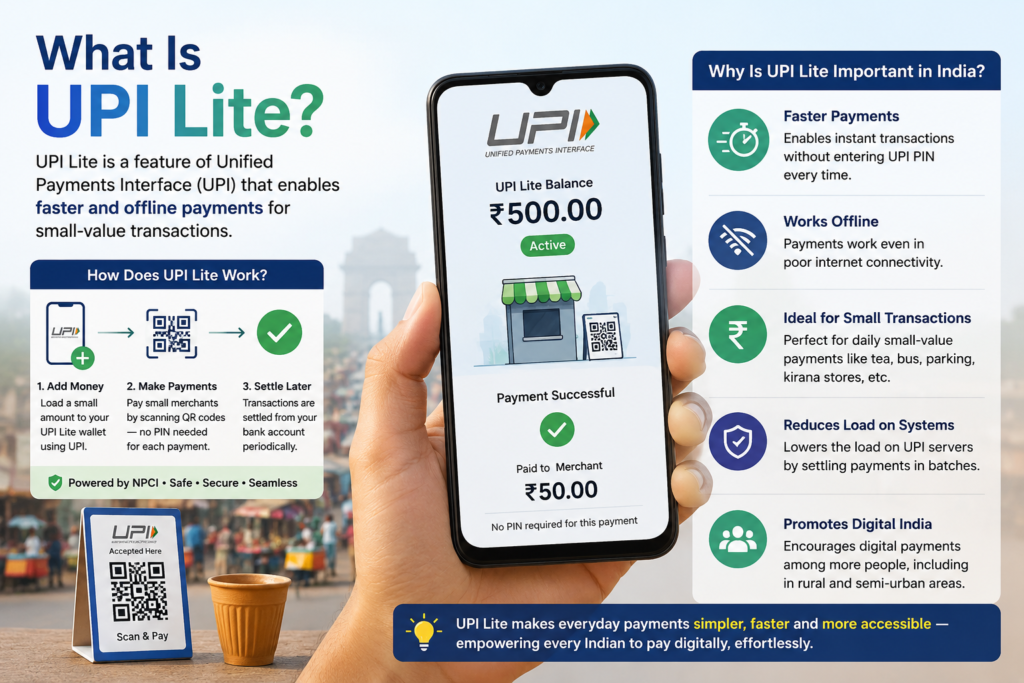
UPI Lite is a simplified version of the Unified Payments Interface designed specifically for small-value transactions. The main purpose behind launching this system was to reduce transaction failures and make digital payments faster for everyday users. In normal UPI payments, every transaction communicates directly with banking servers in real time. As a result, poor internet connectivity or server overload can delay or fail payments. However, UPI Lite works differently because users first add a small amount of money into a lightweight wallet-like balance inside the app. After that, payments can happen faster with minimal dependency on banking infrastructure during each transaction. This innovation has become extremely important in India because digital payment adoption has reached even rural areas where stable internet is still inconsistent. Students, office workers, street vendors, delivery agents, and small business owners all benefit from quick payments without worrying about network issues. Another reason UPI Lite matters is convenience. Many people use UPI several times daily for tea, snacks, local transport, groceries, and parking. Re-entering PINs repeatedly becomes frustrating. Therefore, UPI Lite simplifies these smaller payments and improves user experience significantly. Understanding How To Use UPI Lite For Offline Payments Without Internet gives users more financial flexibility while supporting India’s vision of a less-cash economy powered by secure digital infrastructure and faster payment technologies.
How To Use UPI Lite For Offline Payments Without Internet Step By Step
The process of learning How To Use UPI Lite For Offline Payments Without Internet is actually simpler than most people think. First, users need a bank account linked to a supported UPI application such as PhonePe, Google Pay, Paytm, or BHIM. After opening the application, users must navigate to the UPI Lite section available inside the app dashboard. Most apps display a banner or option labeled “Activate UPI Lite.” Once selected, the app asks users to choose the bank account they want to connect. After verification, users can add funds into their UPI Lite balance using their regular bank account. Usually, the amount ranges from small limits depending on app policies and NPCI regulations. Once the money loads successfully, the UPI Lite feature becomes active immediately. Now comes the important part. When internet signals become weak or unstable, users can still initiate low-value payments using their available UPI Lite balance. Since the amount is already stored inside the app environment, payment processing becomes much faster than traditional UPI methods. In many situations, users do not even need to enter a UPI PIN for very small payments, which makes the process even smoother. Shopkeepers receive instant confirmation, and customers avoid transaction failures. This is exactly why understanding How To Use UPI Lite For Offline Payments Without Internet has become essential for Indian smartphone users who rely heavily on digital transactions every single day.
Major Benefits of Using UPI Lite Without Internet
One of the biggest advantages of understanding How To Use UPI Lite For Offline Payments Without Internet is uninterrupted convenience. Imagine traveling in a train passing through low-network areas while needing to buy food or water. Regular payment systems may fail, but UPI Lite can continue functioning for eligible low-value transactions. Another important benefit is speed. Traditional UPI transactions sometimes take longer because banks process every payment individually through servers. UPI Lite reduces this burden and makes small payments almost instant. Additionally, transaction success rates become much higher compared to standard UPI during peak hours or server congestion periods. Security also improves because smaller payments reduce risks associated with carrying cash. Many people hesitate to carry physical money during travel or crowded events. Therefore, UPI Lite offers a safer alternative. Another hidden advantage is improved battery efficiency. Since repeated authentication and banking server communication reduce, some users notice slightly better app responsiveness and lower data dependency. Students especially benefit from UPI Lite because they frequently make small payments for snacks, stationery, transport, and mobile recharges. Small shopkeepers also love the feature because customers complete payments faster, reducing waiting lines. Furthermore, digital payment history helps users track daily expenses more accurately. In modern financial planning, even tiny expenses matter. Therefore, mastering How To Use UPI Lite For Offline Payments Without Internet can improve spending awareness while simplifying day-to-day money management in both urban and rural India.
Difference Between Normal UPI and UPI Lite
Many users confuse standard UPI with UPI Lite because both work inside the same applications. However, there are important differences users should understand clearly. Traditional UPI connects directly with the bank account during every payment. As a result, internet connectivity and bank server availability become extremely important. On the other hand, UPI Lite stores a prepaid balance inside the application, allowing faster small-value transactions without constant server communication. Another major difference is transaction size. Normal UPI supports larger payments while UPI Lite focuses mainly on smaller everyday transactions. Additionally, regular UPI usually requires entering a PIN for each transaction, whereas UPI Lite may allow faster payments with reduced authentication steps for lower amounts. This improves speed and user convenience dramatically. Bank statement visibility also differs slightly because some UPI Lite transactions may appear differently depending on app implementation and settlement timing. Users who frequently face failed payments in crowded places often find UPI Lite more reliable. Therefore, learning How To Use UPI Lite For Offline Payments Without Internet becomes more valuable for people who prioritize speed and convenience over large transaction capability. Another difference involves server load management. Since millions of Indians use UPI daily, banking systems occasionally face heavy pressure. UPI Lite helps reduce this load by handling small payments separately. Consequently, the overall digital payment ecosystem becomes stronger, faster, and more scalable for future financial growth across India.
Best Apps Supporting UPI Lite in India
Several leading Indian payment applications now support UPI Lite functionality. Among the most popular options are BHIM, Paytm, PhonePe, and Google Pay. Each application offers slightly different interfaces and user experiences, but the activation process remains relatively similar. BHIM, being closely associated with NPCI infrastructure, often receives early support for new UPI features. Meanwhile, PhonePe and Google Pay provide highly user-friendly interfaces that simplify activation for beginners. Paytm also integrates UPI Lite within its broader financial ecosystem including wallets, recharges, and bill payments. When choosing an app for learning How To Use UPI Lite For Offline Payments Without Internet, users should consider factors such as ease of use, bank compatibility, customer support, and transaction reliability. Another important point is app updates. Many users face issues simply because they use outdated application versions. Therefore, keeping the app updated ensures access to the latest UPI Lite improvements and security features. Security reputation also matters significantly. Users should always download payment applications from official app stores only. Fake apps and phishing scams continue targeting digital payment users in India. Therefore, trusted apps become essential for safe transactions. Over time, more fintech companies will likely integrate advanced offline payment capabilities as India’s digital economy expands rapidly. Users who start using UPI Lite early can develop stronger digital payment habits while enjoying faster and more reliable transaction experiences in their everyday lives.
Common Problems Users Face While Using UPI Lite
Although UPI Lite offers many benefits, users sometimes face practical issues that create confusion. One common problem involves activation failure due to unsupported bank accounts. Not every bank supports UPI Lite immediately, so users should verify compatibility first. Another issue occurs when people misunderstand the offline functionality. Many assume complete zero-network operation is always possible. However, certain features may still require occasional connectivity for synchronization or balance updates depending on the app architecture. Some users also forget to maintain sufficient UPI Lite balance, leading to failed payments during emergencies. In addition, outdated applications can create transaction glitches or display errors. Therefore, updating apps regularly is essential for smooth functionality. Security negligence becomes another major issue. Many users share OTPs or install fake payment applications unknowingly. This can compromise financial safety significantly. Another mistake involves assuming UPI Lite replaces normal UPI entirely. In reality, both systems complement each other. Regular UPI remains important for higher-value transactions while UPI Lite handles smaller daily expenses more efficiently. Understanding these limitations helps users use the system more intelligently. Learning How To Use UPI Lite For Offline Payments Without Internet properly also requires awareness about transaction limits, supported devices, and app-specific policies. People who ignore these details often experience avoidable frustrations. Therefore, careful setup and informed usage are the keys to maximizing benefits while minimizing transaction-related problems in daily digital payment activities across India.
Is UPI Lite Safe for Daily Offline Transactions
Security remains one of the biggest concerns whenever people discuss digital payments. Fortunately, UPI Lite has been designed with multiple layers of protection to ensure safer transactions for users across India. Since UPI Lite mainly focuses on small-value payments, the financial risk remains limited compared to high-value online banking activities. Additionally, the system operates within regulated payment applications approved by banking authorities and supported by NPCI guidelines. This increases trust and credibility significantly. Another important security advantage is reduced exposure of primary bank credentials during every small transaction. Instead of repeatedly accessing banking infrastructure for tea, grocery, or parking payments, the prepaid balance mechanism creates a safer transaction layer for day-to-day spending. However, users must still follow basic digital safety practices. They should never share OTPs, UPI PINs, or suspicious links received through SMS or social media. Mobile devices should also remain protected with screen locks and updated security settings. Public Wi-Fi networks should be avoided while accessing financial applications whenever possible. Understanding How To Use UPI Lite For Offline Payments Without Internet responsibly also means recognizing scam tactics. Fraudsters frequently impersonate bank representatives or payment support agents to steal information. Therefore, awareness becomes just as important as technology itself. Overall, UPI Lite is considered highly secure for routine transactions when used carefully through trusted applications downloaded from official platforms like Google Play Store or Apple App Store.
Real-Life Example of How UPI Lite Helps During Internet Failure
Imagine a college student traveling from Raipur to Bhilai in a crowded local bus during peak evening hours. The mobile network suddenly becomes unstable because hundreds of passengers are using internet services simultaneously. The student stops at a roadside food stall to buy snacks and water worth ₹80. Normally, regular UPI payments might fail due to weak connectivity or delayed banking servers. However, because the student already activated UPI Lite and added balance earlier, the payment happens instantly without frustration. The shopkeeper receives confirmation quickly, and both parties save time. This simple example explains why understanding How To Use UPI Lite For Offline Payments Without Internet is becoming increasingly important for Indian users. Similar situations happen every day in railway stations, airports, crowded shopping markets, college campuses, rural villages, and highways where internet reliability remains inconsistent. Another practical example involves street vendors. Small vendors often struggle when customers face UPI payment failures. Delayed transactions create long queues and confusion. With UPI Lite, low-value payments become smoother and faster, improving customer experience and business efficiency. Even delivery executives benefit because they frequently travel through areas with unstable signals. Therefore, UPI Lite is not just another payment feature. It represents a major convenience upgrade for millions of Indians who rely heavily on cashless transactions throughout the day. As digital payments continue growing rapidly, practical systems like UPI Lite will play an increasingly important role in India’s financial ecosystem.
How UPI Lite Supports India’s Digital Economy
India has experienced a remarkable digital payment revolution over the past few years. From urban shopping malls to rural tea stalls, UPI has transformed the way people exchange money. However, one major challenge always existed: internet dependency. In a country with diverse geography and varying network quality, uninterrupted connectivity is not always available. This is exactly where UPI Lite becomes a game-changing innovation. By enabling smaller transactions with reduced dependency on real-time bank communication, UPI Lite improves payment reliability significantly. Learning How To Use UPI Lite For Offline Payments Without Internet therefore becomes more than personal convenience. It directly supports India’s larger digital economy mission. Faster payments encourage more people to adopt cashless methods confidently. Small businesses also gain because transaction success rates improve even during network congestion periods. Furthermore, reduced server pressure helps the entire UPI ecosystem function more efficiently during peak usage hours. Another important contribution involves financial inclusion. Millions of Indians living in semi-urban and rural areas face internet instability regularly. UPI Lite bridges this gap by making digital payments more practical in those regions. Government initiatives promoting digital transactions also benefit because easier payment systems encourage wider adoption among first-time users. Over time, technologies like UPI Lite can reduce dependence on physical cash, lower transaction friction, improve transparency, and strengthen India’s position as a global leader in digital financial innovation and payment infrastructure development.
Step-by-Step Tips to Activate UPI Lite Successfully
Many users fail during activation simply because they skip important setup steps. Therefore, following the correct process carefully is essential for smooth functionality. First, ensure your mobile number linked with the bank account remains active on the same smartphone where the payment app is installed. This helps the app verify banking credentials correctly. Next, update the payment application to the latest version because older versions may not support UPI Lite properly. After opening the app, search for the UPI Lite option inside the homepage, profile section, or payment settings menu. Once you select activation, the app may ask permission for SMS verification and device authentication. After verification, choose the bank account you want to link. Then add money into your UPI Lite balance using your primary bank account. Most users start with small amounts for testing purposes. Once funds are added successfully, the system becomes ready for low-value transactions. Another useful tip while learning How To Use UPI Lite For Offline Payments Without Internet is maintaining moderate balance levels instead of loading excessive money unnecessarily. This improves financial control while minimizing risk in case of device loss. Users should also enable application lock features and phone security settings for additional protection. Finally, always test the feature with a small transaction before relying on it during emergencies or travel situations. These simple precautions help users enjoy a smooth and frustration-free UPI Lite experience in daily life.
Hidden Advantages Most People Do Not Know About UPI Lite
Most people think UPI Lite only helps during internet problems, but it offers several hidden benefits beyond that. One underrated advantage is reduced transaction clutter in bank statements for small-value payments. Frequent low-value transactions like tea, snacks, auto rides, or parking charges can make bank histories difficult to track. UPI Lite simplifies this experience depending on app implementation. Another hidden benefit involves faster checkout experiences in crowded environments. During festivals, shopping sales, or public events, server congestion often slows normal UPI payments dramatically. UPI Lite helps bypass much of this delay for smaller purchases. This improves customer satisfaction significantly. Another overlooked advantage is psychological spending awareness. Since users preload a limited amount into UPI Lite, they naturally become more conscious about daily expenses. This works similarly to budgeting techniques where predefined spending limits encourage financial discipline. Learning How To Use UPI Lite For Offline Payments Without Internet can therefore indirectly improve money management habits as well. Students and young professionals especially benefit because they often overspend on tiny repeated purchases without realizing the monthly impact. Another interesting benefit involves battery efficiency during weak network conditions. Phones constantly searching for connectivity consume more power. Faster lightweight transactions can reduce some processing strain compared to repeated failed payment attempts. Finally, UPI Lite improves trust in digital payments among older users who previously avoided online transactions due to technical failures. As confidence grows, more people shift comfortably toward secure digital financial systems instead of depending entirely on physical cash.
Biggest Mistakes People Make While Using UPI Lite
One of the biggest mistakes users make is assuming UPI Lite works exactly like a traditional wallet application. In reality, it is designed specifically for lightweight small-value transactions integrated within the UPI ecosystem. Another common mistake involves ignoring transaction limits. Users sometimes attempt larger payments through UPI Lite and become confused when transactions fail. Understanding the intended use case is very important for smooth operation. Another serious error occurs when people forget to update their apps regularly. Fintech applications continuously improve security and performance features. Outdated versions can create compatibility problems or transaction failures. Some users also keep extremely high balances in UPI Lite unnecessarily. While the system remains secure, it is still smarter to maintain only practical daily-use amounts. Another frequent issue relates to poor device security. Many people do not use screen locks, fingerprint protection, or app locks. If the device gets lost, unauthorized access risks increase. Learning How To Use UPI Lite For Offline Payments Without Internet responsibly also means following good cybersecurity habits consistently. Another mistake involves downloading fake payment applications from unofficial websites. Fraudulent apps can steal banking information and compromise financial safety. Users should only install apps from official stores. Finally, many people fail to test the feature before depending on it during travel or emergencies. Performing one or two small trial transactions first helps users understand the system confidently. Avoiding these common mistakes ensures smoother transactions, better financial safety, and a more reliable digital payment experience overall.
UPI Lite vs Mobile Wallets Which Is Better
Many users compare UPI Lite with traditional mobile wallets because both involve prepaid balances for digital transactions. However, important differences exist between these systems. Mobile wallets often require separate KYC procedures, wallet loading processes, and merchant acceptance conditions. In contrast, UPI Lite works directly within the familiar UPI ecosystem linked with bank accounts. This integration makes adoption easier for existing UPI users. Another key difference involves interoperability. UPI-based systems generally offer broader compatibility across merchants and applications compared to isolated wallet ecosystems. Additionally, UPI Lite benefits from India’s rapidly expanding UPI infrastructure supported by NPCI and banking networks. Learning How To Use UPI Lite For Offline Payments Without Internet therefore provides users with flexibility inside the country’s most dominant digital payment ecosystem. Another advantage is user trust. Many Indians already rely heavily on UPI daily, so adding Lite functionality feels natural instead of learning an entirely separate system. However, mobile wallets may still offer additional features like cashback programs, shopping integrations, or ticket booking services. Therefore, the better option depends on user priorities. People focused mainly on quick low-value payments and transaction reliability may prefer UPI Lite. Meanwhile, users wanting broader lifestyle integrations might continue using wallets alongside UPI Lite. In practical terms, many Indians now use both systems together depending on payment needs, convenience, and merchant support availability during everyday transactions.
Future of Offline Digital Payments in India
The future of offline digital payments in India looks extremely promising. As smartphone adoption continues increasing rapidly across cities, towns, and villages, demand for reliable low-connectivity payment solutions will also grow. UPI Lite represents only the beginning of a broader evolution in digital financial technology. In the coming years, payment systems may integrate advanced offline authentication technologies, faster synchronization methods, and deeper merchant compatibility. Rural India especially stands to benefit enormously because many areas still experience unstable internet infrastructure. Understanding How To Use UPI Lite For Offline Payments Without Internet today prepares users for a future where digital transactions become even more seamless and intelligent. Another major trend involves wearable payments and feature-phone-based financial technologies. India’s fintech ecosystem is evolving rapidly to include diverse user groups beyond premium smartphone owners. Artificial intelligence and predictive fraud detection systems may also strengthen security further while improving transaction speeds. Government support for digital infrastructure expansion will likely accelerate these innovations. Moreover, small businesses increasingly prefer cashless operations because digital records simplify accounting and improve transparency. As consumer trust in digital payments grows stronger, offline-capable systems like UPI Lite could eventually become standard features across multiple banking and fintech platforms. The combination of convenience, speed, security, and accessibility makes offline-capable payment technologies highly valuable for India’s future economy. Therefore, users who adapt early will enjoy smoother financial experiences and better preparedness for the next generation of digital transactions.
Expert Pro Tips for Using UPI Lite Efficiently
Experts recommend treating UPI Lite as a daily convenience tool rather than a primary savings storage system. Therefore, maintain only the amount needed for regular small expenses such as food, transport, parking, or grocery shopping. Another professional tip is using UPI Lite mainly in environments where network instability frequently occurs. Travelers, delivery workers, college students, and field employees benefit significantly from this strategy. Users should also monitor transaction histories regularly to maintain financial awareness. Many people ignore tiny repeated purchases, but small expenses accumulate quickly over time. Understanding How To Use UPI Lite For Offline Payments Without Internet effectively can therefore support smarter budgeting habits as well. Another valuable tip involves combining UPI Lite with traditional UPI instead of replacing it completely. Use Lite for low-value fast payments while reserving normal UPI for larger secure transactions. Security experts also advise enabling biometric authentication whenever available because it improves device-level protection without reducing convenience. Additionally, users should avoid using public charging stations carelessly since compromised USB ports can sometimes create cybersecurity risks. Another advanced tip involves keeping at least two trusted payment apps installed. If one application experiences temporary technical issues, users still maintain transaction flexibility through another platform. Finally, educate family members about safe digital payment practices because fraud awareness remains just as important as technology adoption itself. Smart usage habits combined with proper understanding can transform UPI Lite into a highly reliable financial convenience tool for everyday Indian consumers.
Frequently Asked Questions About How To Use UPI Lite For Offline Payments Without Internet
What is UPI Lite in simple words?
UPI Lite is a lightweight version of UPI designed for fast small-value transactions with reduced dependency on real-time bank server communication. It helps users make quick payments more reliably.
Can I use UPI Lite completely without internet?
UPI Lite reduces internet dependency significantly for small transactions, but occasional connectivity may still be required depending on app synchronization and technical implementation.
Which apps support UPI Lite in India?
Popular apps supporting UPI Lite include BHIM, PhonePe, Google Pay, and Paytm. Support may vary depending on bank compatibility and app updates.
Is UPI Lite safe for daily use?
Yes, UPI Lite is considered secure for daily low-value transactions when users follow proper digital safety practices such as avoiding OTP sharing and using trusted applications.
What is the benefit of learning How To Use UPI Lite For Offline Payments Without Internet?
Learning How To Use UPI Lite For Offline Payments Without Internet helps users avoid transaction failures, complete payments faster, and enjoy smoother digital payment experiences during network issues.
Conclusion
How To Use UPI Lite For Offline Payments Without Internet is no longer just a technical topic for fintech enthusiasts. It has become a practical life skill for millions of Indians who depend on digital payments every day. From crowded markets and railway stations to villages and highways, internet instability can interrupt regular UPI transactions anytime. UPI Lite solves this problem by offering faster, lightweight, and more reliable low-value payments with minimal dependency on banking servers during every transaction. As India moves deeper into the digital economy era, systems like UPI Lite will become increasingly important for convenience, financial inclusion, and smoother user experiences. However, technology alone is not enough. Users must also understand safe practices, transaction limits, and proper activation methods to use the feature effectively. People who learn and adapt early will enjoy faster transactions, reduced payment stress, and improved confidence in digital finance systems. Whether you are a student, traveler, office worker, or small business owner, UPI Lite can simplify your everyday financial activities significantly. Start using it smartly today and experience a smoother cashless lifestyle without worrying constantly about internet connectivity problems.